Step 1
Our treatments against miscellaneous insects
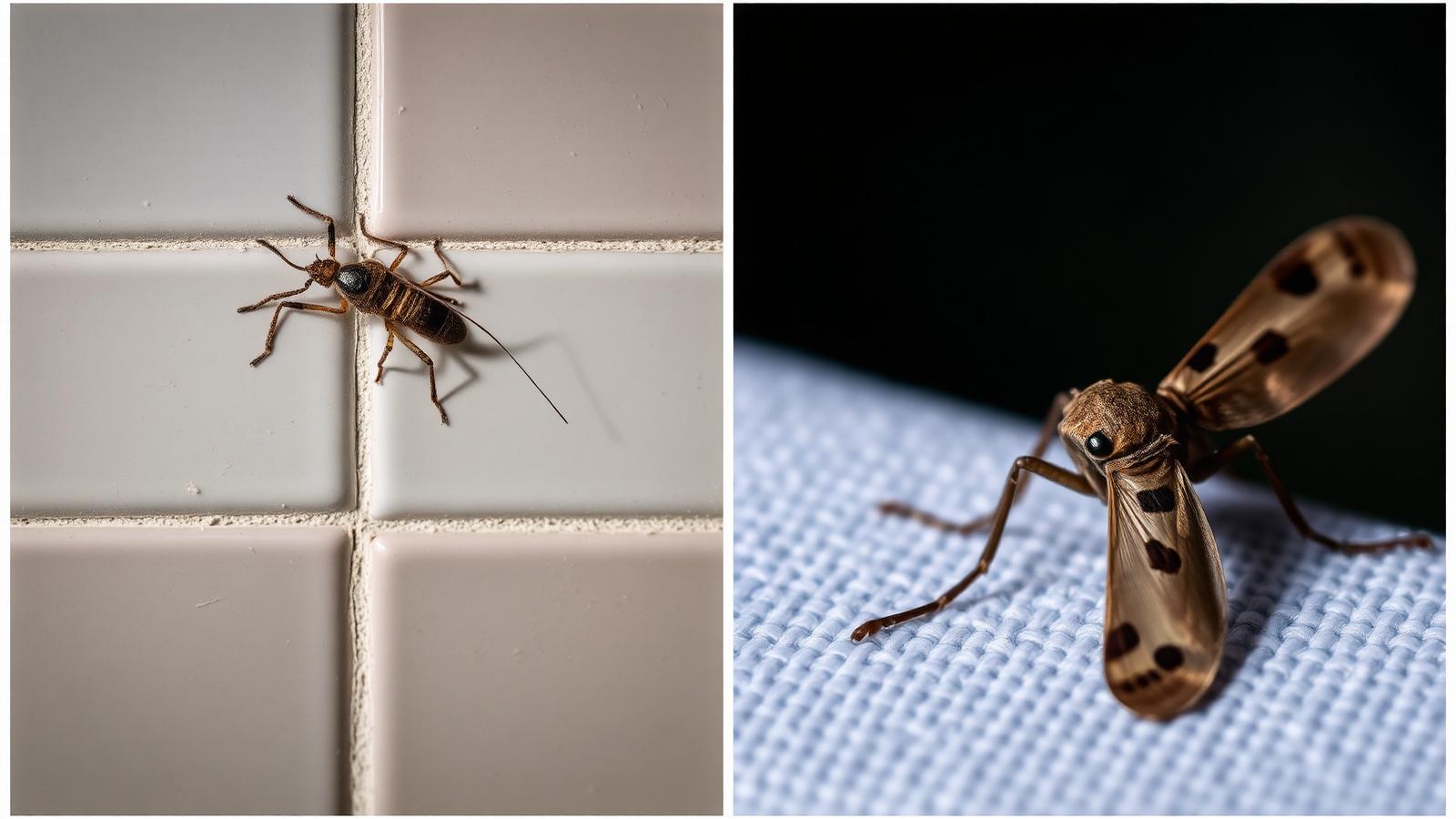
For rarer insects (fleas, spiders, silverfish, sciarids, weevils, woodworm...), our technicians start with a free diagnosis to identify the species, its habitat and its source precisely. The protocol — residual spraying, gel, biological treatment or timber injection — is then built to measure, without resorting to ill-suited products that needlessly prolong the infestation.
Step 2
Habitat and behaviour of miscellaneous insects
Habitats vary radically according to the species, which makes technical diagnosis indispensable. Fleas (Ctenocephalides felis, C. canis) take refuge in carpets, rugs, baskets and floorboard interstices near a pet. Silverfish colonise bathrooms, under sinks and tile joints where humidity exceeds 75%. Sciarids (fungus gnats) lay in overwatered houseplants. Wood-boring insects (woodworm, house longhorn beetles, lyctus) dig their galleries in structural timber and antique furniture. Earwigs, woodlice and spiders lodge in plaster cracks, window joints and dark, infrequently used corners.
Step 3
What causes an infestation?
According to the species targeted, causes differ as much as habitats: adoption of a new pet or moving into a dwelling where an animal previously lived for fleas; chronically poorly treated humidity and ventilation defects for silverfish and woodlice; overwatering and poorly draining potting soil for sciarids; wood humidity or absence of woodwork treatment for wood-boring insects; façade cracks, degraded joints and external storage (firewood, cardboard) for earwigs. Field diagnosis by a Certibiocide technician remains the only way to identify the species with certainty and trace it back to the exact cause before choosing the adapted protocol.
Step 4
How do you recognise an infestation?
Signs vary strongly according to species: unexplained bites on the lower legs (fleas), small silver insects in the bathroom (silverfish), sudden invasion of fungus gnats around plants (sciarids), fine holes in a beam with sawdust (woodworm), or regular presence of isolated specimens without being able to identify them. Without precise diagnosis, the wrong target is treated and the proliferation is allowed to take hold.
Step 5
Where do they hide?
Depending on the species, refuges can be totally opposite: bedding and rugs for fleas, bathrooms and joints for silverfish, damp soil for sciarids, structural timber for wood-boring insects, frames and plaster cracks for earwigs. Field diagnosis by a Certibiocide technician remains indispensable to identify the species and its habitat before any choice of protocol.
Step 6
Health and property risks
Depending on the species, the impact differs: skin allergies and bites for fleas, food contamination for weevils, structural wood degradation for woodworm and longhorn beetles, soiling and discomfort for sciarids and earwigs. Poor diagnosis often leads to ineffective mass-market treatments and continuous degradation of goods or the health of occupants.
Step 7
Our 5-step intervention
- 1
Full inspection
Complete inspection of the premises, precise identification of the pest, assessment of the infestation level and of the layout of the site in order to define the most effective intervention strategy.
- 2
Transparent quote
A detailed quote is issued before any intervention, presenting the recommended solutions, the response times and any travel costs that may apply.
- 3
Professional treatment
Intervention carried out by a certified technician using mechanical, thermal or chemical methods suited to your situation, in full compliance with current regulations.
- 4
Prevention & proofing
Identification of the causes of the infestation, tailored recommendations and, where necessary, sealing of entry points to limit the risk of re-infestation.
- 5
Follow-up & support
An intervention report is issued, along with post-treatment advice and the option to schedule a follow-up visit or a monitoring contract according to your needs.
Step 8
Other insects price list — Paris & Île-de-France
Indicative prices — exact quote issued after the free diagnosis.
| Surface | Indicative price |
|---|---|
| up to 30m² | from 119 € |
| up to 60m² | from 169 € |
| up to 90m² | from 219 € |
| 120m² and above | on quote |
Step 9
How can infestations be prevented?
Beyond common gestures (airing, humidity control, thorough cleaning, airtight storage of food), prevention depends on the species concerned: antiparasitic treatment of animals for fleas, regular dusting of attics and cellars for spiders, monitoring of structural timber for wood-boring insects. Professional diagnosis allows for precisely oriented measures.
Step 10
Other insects — FAQ
How long does an intervention take?
Between 1 and 4 hours depending on the surface area and the level of infestation.
Are the treatments dangerous for children and pets?
Our protocols strictly comply with regulations. A re-entry period will be specified for you.
Do you handle emergencies?
Yes, intervention within 24h across the whole of Île-de-France. Intervention 7 days a week, 24/7.
Is there a guarantee?
Yes, a results guarantee with follow-up visits included depending on the service.
What area do you cover?
Paris (75), 77, 78, 91, 92, 93, 94, 95 — the whole of Greater Paris.
Prevention and follow-up — optional add-on service
Beyond the other insects treatment itself, SOS 4D Paris offers an optional scheduled follow-up visit to verify how well the protocol worked, detect any renewed activity and adjust the devices if needed. This separately invoiced service includes an inspection of the treated areas and sensitive spots, a check of the baits or traps in place, a comparative assessment and a written report handed over directly.
To prevent the pest from coming back, we identify the contributing factors specific to your home or premises — entry points, food sources, damp areas, sealing defects — and give you concrete recommendations to implement yourself. A periodic visit contract (quarterly, half-yearly or yearly) is also available on quote for long-term protection; its price depends on the chosen frequency and the site configuration.
Need a fast intervention?
Our certified technicians intervene within 24h across Paris and Île-de-France.