
Step 1
Our treatments against cockroaches
Cockroach treatment combines precise identification of the species, application of insecticide gel with a domino effect on transit areas, and — for massive infestations or building common areas — complementary residual spraying in technical shafts. Coupling with a growth regulator (IGR) is essential to break the reproduction cycle and achieve sustainable eradication.
Insecticide bait gel
Deposition of micro-dots of gel (Imidacloprid, Fipronil) in strategic areas: behind electrical appliances, under the sink, in technical shafts. Domino effect: the cockroach becomes contaminated, returns to the nest, and poisons its peers, including the eggs.
Residual spraying (TP18)
Application of a residual TP18 biocidal insecticide (6-8 weeks), authorized by ANSES, on skirting boards, cracks, trash chutes, and technical shafts. Recommended for building common areas and massive infestations.
Hot fogging
Diffusion of an insecticide mist that penetrates all nooks and crannies, ideal for technical rooms and closed back-kitchens. Premises must be unoccupied for 4 hours.
IGR — Growth regulators
Coupled with gel or spraying, IGRs prevent larvae from reaching the adult stage and reproducing. Essential to durably eradicate a population.
Step 2
Habitat and behaviour of cockroaches
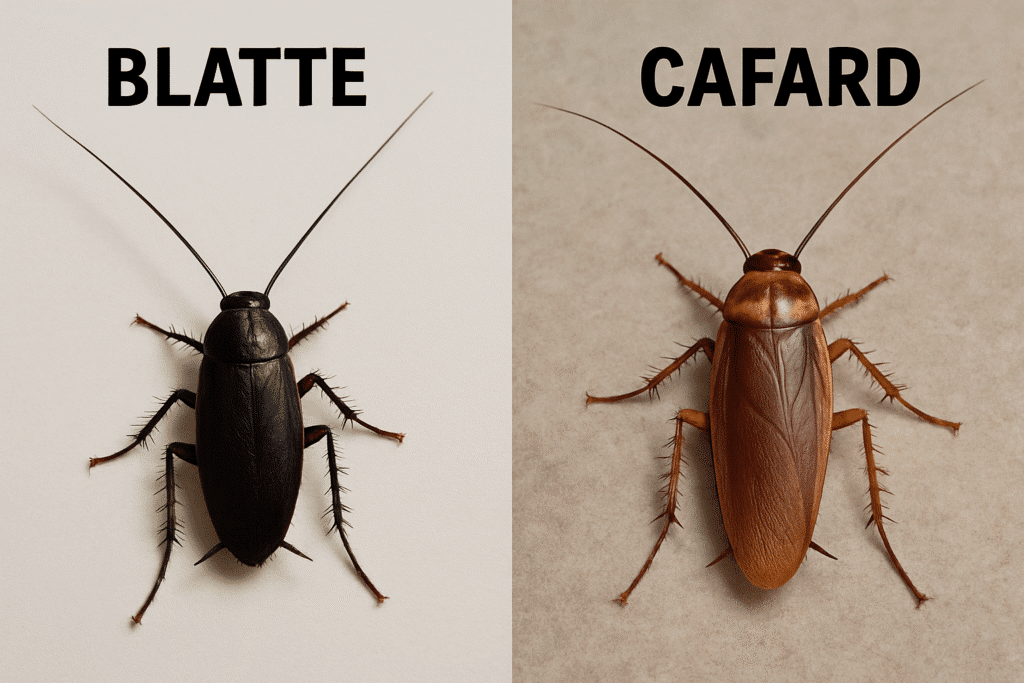
Three species dominate the Paris region: the German cockroach (Blattella germanica), small and light beige, is by far the most frequent in kitchens and behind electrical appliances; the oriental cockroach (Blatta orientalis), darker, colonizes cellars, basements, and bin rooms; the American cockroach (Periplaneta americana), larger, is found in damp basements, boiler rooms, and sewage networks. All seek heat (ideally 25–30°C), humidity, and darkness: they retreat during the day into gaps behind worktops, skirting joints, under hoods, in fridge and dishwasher motors, and around hot pipes. A single ootheca (egg capsule) contains 30 to 40 young, which makes their proliferation extremely fast.
Step 3
What causes an infestation?
Cockroaches rarely arrive alone: they are introduced by cardboard packaging (deliveries, moving, local shops), second-hand electrical appliances (fridge, microwave, coffee machine), shopping bags from infested stores, or more simply by contagion between housing units via technical shafts, trash chutes, and pipe passages. In Parisian apartment buildings, it only takes one untreated apartment — often unoccupied or used for short-term rental — for a colony to climb up the wet risers floor by floor. The lasting presence of crumbs, grease on hobs, dishes left out at night, and unsealed bins always ends up anchoring the infestation.
Step 4
How do you recognise an infestation?
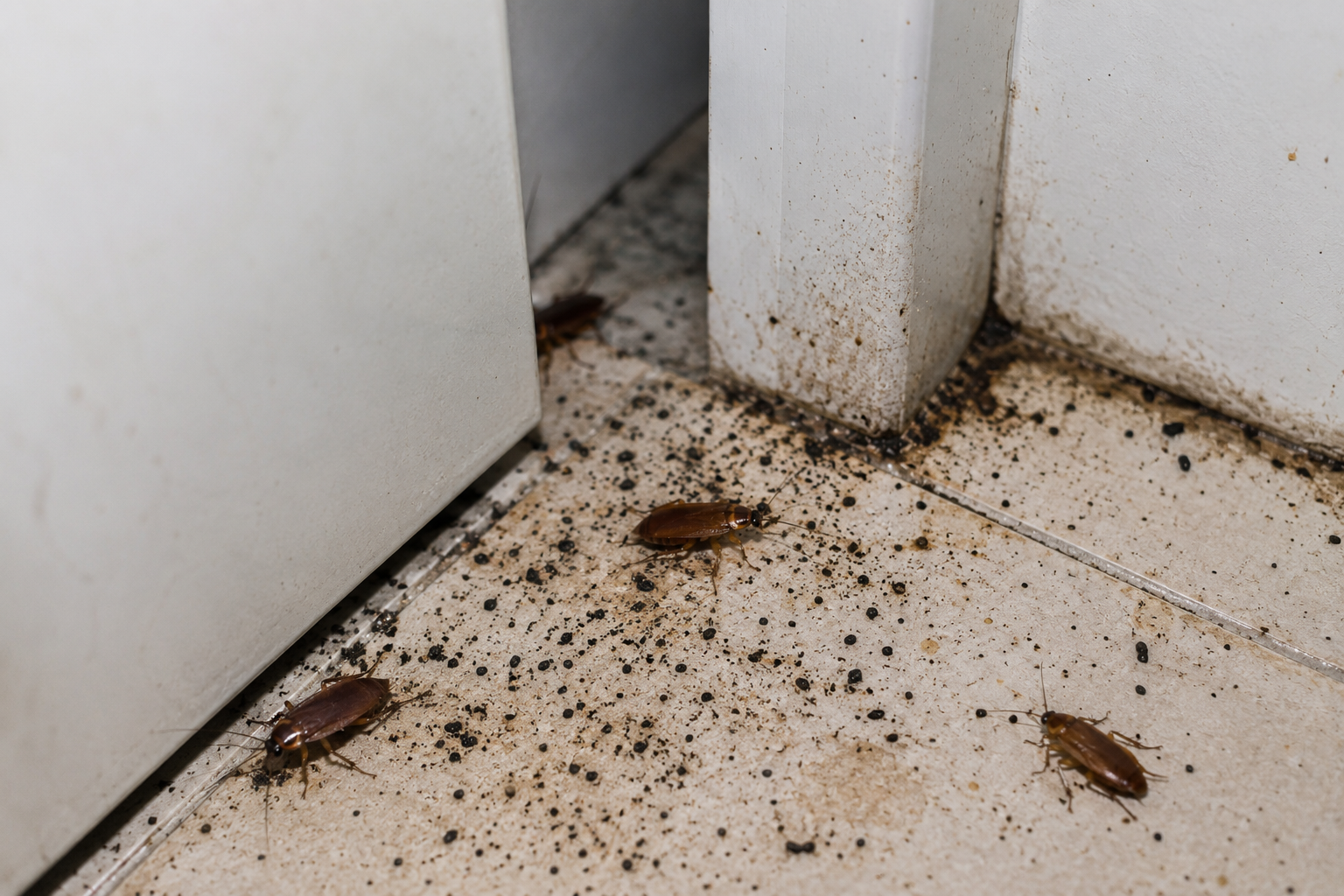
Cockroaches live at night: it is by suddenly turning on the light in the kitchen or bathroom that one catches them scurrying along skirting boards. Under the sink, behind the refrigerator, and in technical shafts, one finds small droppings similar to coffee grounds and sometimes brown oothecae (egg capsules). A greasy, musty smell that persists despite cleaning betrays the presence of aggregation pheromones: the colony is then already well established.
Step 5
In pictures
Step 6
Where do they hide?
Seeking heat and humidity, cockroaches nestle behind electrical appliances, under the sink, in cracks in skirting boards and tiling, in trash chutes, and in building technical shafts. It is through these shafts that they pass from one apartment to another, which explains why an isolated treatment of a single unit often leads to rapid recolonization in a co-ownership.
Step 7
Health and property risks
Cockroaches transport Salmonella, E. coli, and Staphylococci onto worktops, dishes, and food that they crawl over. They significantly aggravate allergies and asthma, especially in children. In a restaurant, bakery, or food business, their simple visible presence is enough to trigger a report to the health services and, in serious cases, an immediate administrative closure.
Step 8
Our 5-step intervention
- 1
Full inspection
Complete inspection of the premises, precise identification of the pest, assessment of the infestation level and of the layout of the site in order to define the most effective intervention strategy.
- 2
Transparent quote
A detailed quote is issued before any intervention, presenting the recommended solutions, the response times and any travel costs that may apply.
- 3
Professional treatment
Intervention carried out by a certified technician using mechanical, thermal or chemical methods suited to your situation, in full compliance with current regulations.
- 4
Prevention & proofing
Identification of the causes of the infestation, tailored recommendations and, where necessary, sealing of entry points to limit the risk of re-infestation.
- 5
Follow-up & support
An intervention report is issued, along with post-treatment advice and the option to schedule a follow-up visit or a monitoring contract according to your needs.
Step 9
Cockroaches price list — Paris & Île-de-France
Indicative prices — exact quote issued after the free diagnosis.
| Surface | Indicative price |
|---|---|
| up to 30m² | from 119 € |
| up to 60m² | from 169 € |
| up to 90m² | from 219 € |
| 120m² and above | on quote |
Step 10
How can infestations be prevented?
On a daily basis, cleaning up crumbs and liquids under electrical appliances every evening, storing food in airtight containers, quickly repairing leaks and damp areas, and systematically inspecting incoming cardboard (deliveries, second-hand electrical appliances) greatly reduce the risk. For a food business, an annual preventive treatment using targeted gel remains the most economical way to avoid a declared infestation.
Step 11
Cockroaches — FAQ
How long does an intervention take?
Between 1 and 4 hours depending on the surface area and the level of infestation.
Are the treatments dangerous for children and pets?
Our protocols strictly comply with regulations. A re-entry period will be specified for you.
Do you handle emergencies?
Yes, intervention within 24h across the whole of Île-de-France. Intervention 7 days a week, 24/7.
Is there a guarantee?
Yes, a results guarantee with follow-up visits included depending on the service.
What area do you cover?
Paris (75), 77, 78, 91, 92, 93, 94, 95 — the whole of Greater Paris.
Prevention and follow-up — optional add-on service
Beyond the cockroaches treatment itself, SOS 4D Paris offers an optional scheduled follow-up visit to verify how well the protocol worked, detect any renewed activity and adjust the devices if needed. This separately invoiced service includes an inspection of the treated areas and sensitive spots, a check of the baits or traps in place, a comparative assessment and a written report handed over directly.
To prevent the pest from coming back, we identify the contributing factors specific to your home or premises — entry points, food sources, damp areas, sealing defects — and give you concrete recommendations to implement yourself. A periodic visit contract (quarterly, half-yearly or yearly) is also available on quote for long-term protection; its price depends on the chosen frequency and the site configuration.
Need a fast intervention?
Our certified technicians intervene within 24h across Paris and Île-de-France.