
Step 1
Our treatments against wasps and hornets
The destruction of a wasp or hornet nest is carried out in full anti-sting protective equipment, with a protocol adapted to the species, the nest's location and its accessibility. Our technicians intervene safely to neutralise the colony and secure the area.
Destruction by dusting the nest
Injection of a TP18 biocidal product directly into the heart of the nest using a professional duster. This method allows for rapid elimination of the colony while limiting the dispersal of the insects.
Targeted spraying
Application of a TP18 biocidal product via spraying or insecticidal foam when this method is the most suitable. The treatment acts effectively on adults as well as larvae present in the nest.
Intervention with a telescopic pole
Treatment from a distance using professional telescopic poles, allowing intervention in complete safety without direct contact with the colony when conditions allow.
Nest removal & security
When possible and relevant, the nest is removed after complete neutralisation of the colony. The area is then secured and recommendations are provided to limit the risks of a new installation.
Step 2
Habitat and behaviour of wasps and hornets
The common wasp (Vespula vulgaris) and the German wasp (Vespula germanica) build nests out of papier-mâché under roofs, in attics, roller shutter casings, store boxes, letterboxes, hollow trees and sometimes underground. The European hornet (Vespa crabro), which is larger, installs its nests in hollow trunks, barns and roof structures. The Asian hornet (Vespa velutina nigrithorax), an invasive species introduced to France in 2004, builds large, pear-shaped nests that can exceed 80 cm in diameter, most often high up in large trees but also under roof overhangs and in dense hedges. A colony contains 2,000 to 5,000 individuals at its peak in late August, a period when aggressiveness is at its maximum.
Step 3
What causes an infestation?
The installation of a nest near a dwelling is favoured by the presence of high, dry and infrequently used shelters (uninsulated attics, roof soffits, shutters left closed for a long time, store boxes), by the proximity of sweet food sources in late summer (fallen fruit, café terraces, bins, beehives in the case of the Asian hornet) and by the absence of early intervention in the spring, when the foundress builds a primary nest the size of a walnut alone. A nest detected in April–May can be neutralised in a few minutes; the same nest left until August requires intervention in full protective equipment and represents a real risk to the occupants.
Step 4
How do you recognise an infestation?
Regular coming-and-going of insects at the exact same point on a façade, shutter or hedge is the first reliable indicator. A continuous buzzing perceptible from a few metres away confirms the presence of an active nest. Visually, the common wasp nest is grey, paper-like and shaped like a ball or cone, whilst the Asian hornet nest forms a large beige sphere high in a tree, often invisible until the leaves fall. The further the season progresses, the more numerous and aggressive the colony becomes.
Step 5
In pictures
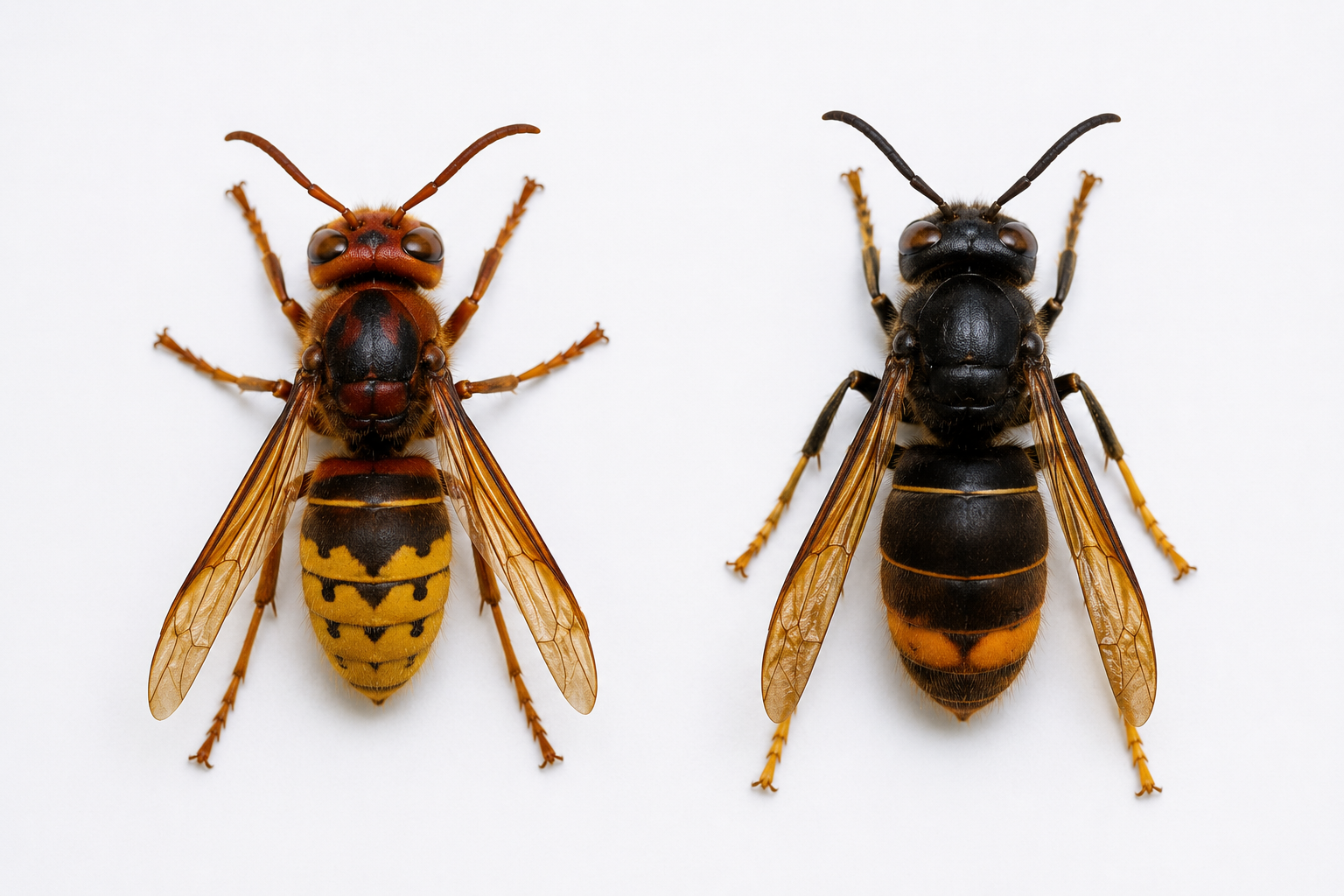
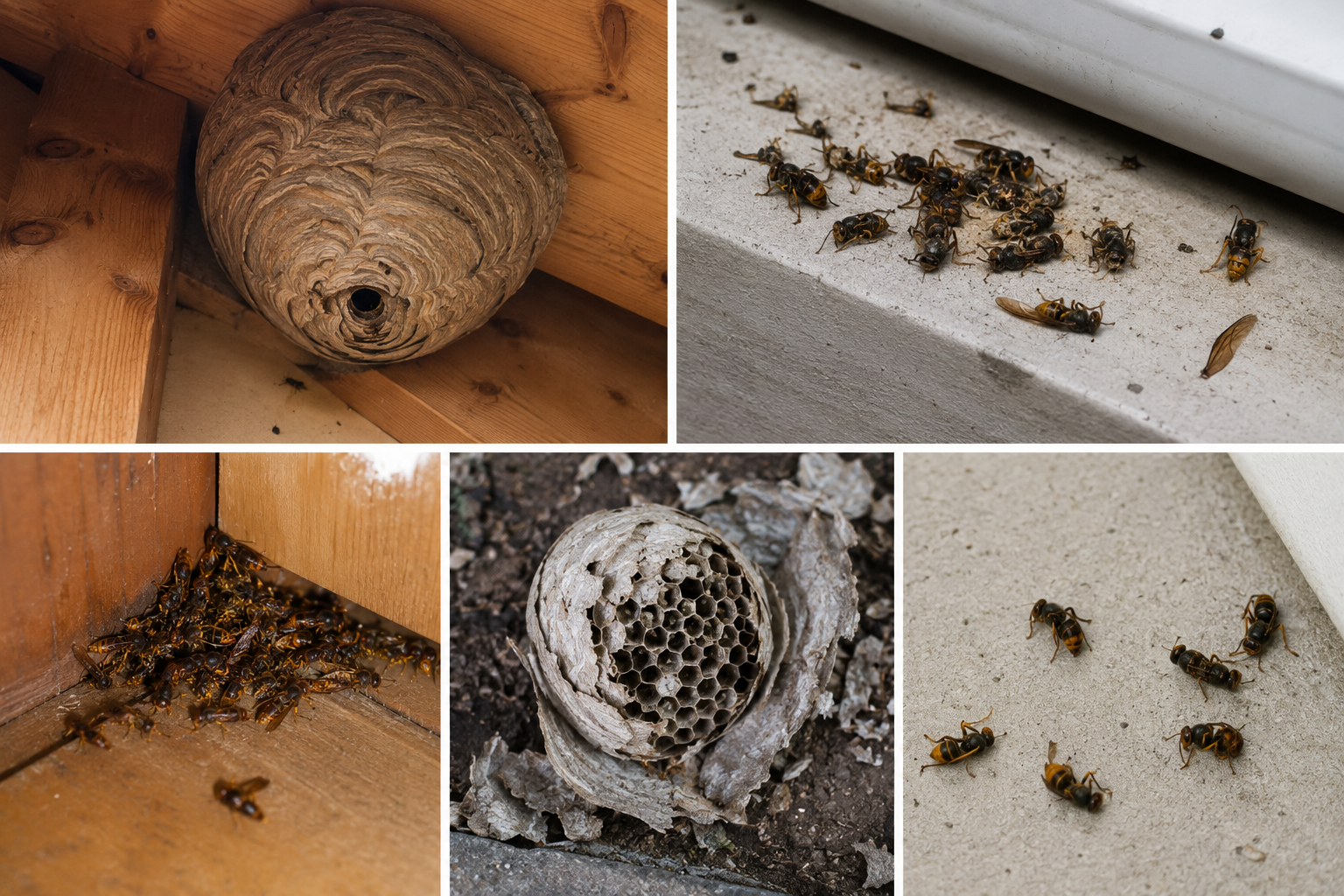
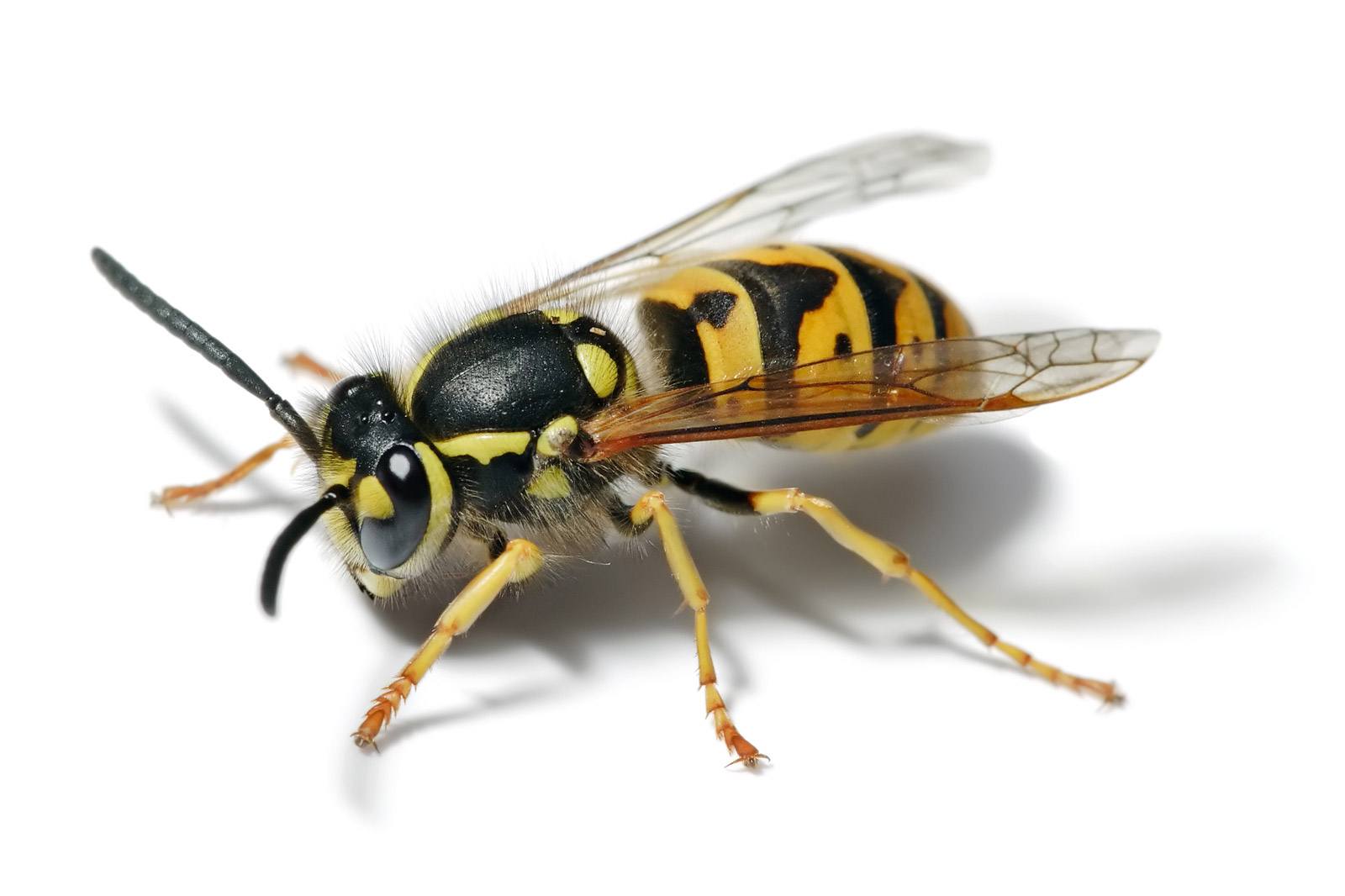
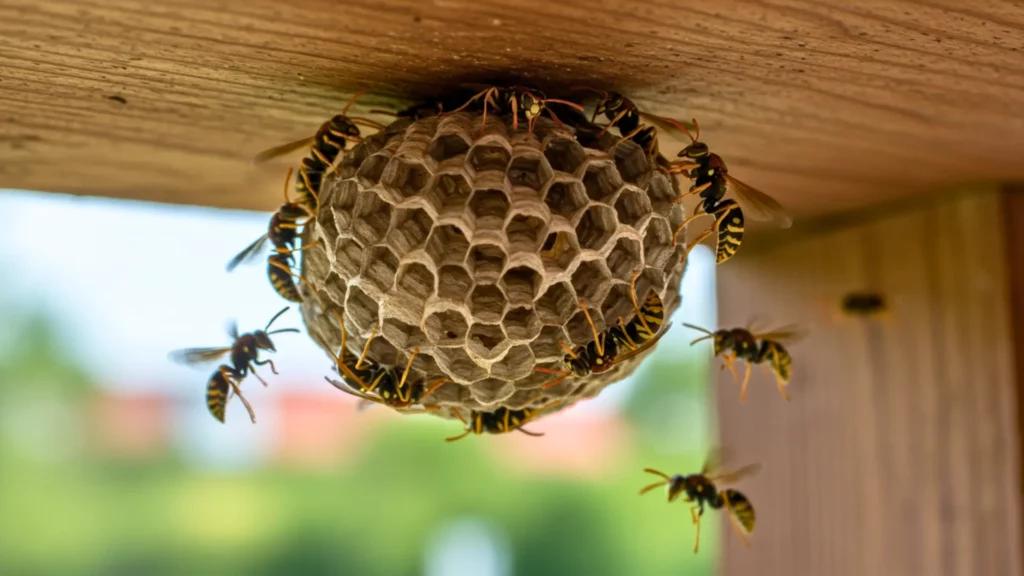
Step 6
Where do they hide?
Wasps and hornets look for supports protected from wind and rain: attics and roof spaces, closed shutters that are rarely used, dense hedges, trees at height, garden sheds and wall cavities. Precise inspection of the nest and its entry point determines the choice of equipment: a nest in the treetop requires a telescopic pole, a nest under a roof requires intervention in safety from inside the attic.
Step 7
Health and property risks
A wasp or hornet nest near a dwelling is an immediate danger: multiple simultaneous stings can cause massive oedema and, in an allergic person, anaphylactic shock with vital consequences. The Asian hornet, an invasive species, decimates neighbouring bee colonies in a few weeks and enlarges its nest very rapidly if intervention does not take place in early spring.
Step 8
Our 5-step intervention
- 1
Full inspection
Complete inspection of the premises, precise identification of the pest, assessment of the infestation level and of the layout of the site in order to define the most effective intervention strategy.
- 2
Transparent quote
A detailed quote is issued before any intervention, presenting the recommended solutions, the response times and any travel costs that may apply.
- 3
Professional treatment
Intervention carried out by a certified technician using mechanical, thermal or chemical methods suited to your situation, in full compliance with current regulations.
- 4
Prevention & proofing
Identification of the causes of the infestation, tailored recommendations and, where necessary, sealing of entry points to limit the risk of re-infestation.
- 5
Follow-up & support
An intervention report is issued, along with post-treatment advice and the option to schedule a follow-up visit or a monitoring contract according to your needs.
Step 9
Wasps & Hornets price list — Paris & Île-de-France
Indicative prices — exact quote issued after the free diagnosis.
| Surface | Indicative price |
|---|---|
| up to 30m² | from 119 € |
| up to 60m² | from 169 € |
| up to 90m² | from 219 € |
| 120m² and above | on quote |
Step 10
How can infestations be prevented?
An inspection of attics, shutters and sheds in the spring allows primary nests the size of an orange to be identified and treated before the colony grows — it is at this stage that the operation is simplest and least expensive. During the season, never attempt to destroy a large nest alone: a full-body suit, a mask and equipment for dusting from a distance remain essential to intervene without risk.
Step 11
Wasps & Hornets — FAQ
How long does an intervention take?
Between 1 and 4 hours depending on the surface area and the level of infestation.
Are the treatments dangerous for children and pets?
Our protocols strictly comply with regulations. A re-entry period will be specified for you.
Do you handle emergencies?
Yes, intervention within 24h across the whole of Île-de-France. Intervention 7 days a week, 24/7.
Is there a guarantee?
Yes, a results guarantee with follow-up visits included depending on the service.
What area do you cover?
Paris (75), 77, 78, 91, 92, 93, 94, 95 — the whole of Greater Paris.
Prevention and follow-up — optional add-on service
Beyond the wasps & hornets treatment itself, SOS 4D Paris offers an optional scheduled follow-up visit to verify how well the protocol worked, detect any renewed activity and adjust the devices if needed. This separately invoiced service includes an inspection of the treated areas and sensitive spots, a check of the baits or traps in place, a comparative assessment and a written report handed over directly.
To prevent the pest from coming back, we identify the contributing factors specific to your home or premises — entry points, food sources, damp areas, sealing defects — and give you concrete recommendations to implement yourself. A periodic visit contract (quarterly, half-yearly or yearly) is also available on quote for long-term protection; its price depends on the chosen frequency and the site configuration.
Need a fast intervention?
Our certified technicians intervene within 24h across Paris and Île-de-France.