Step 1
Our treatments against flies
Fly treatment combines residual spraying on resting zones (walls, ceilings, frames), the installation of UV light traps in food production zones, and destruction of larval breeding sites via insecticidal treatment or disinsection of containers and floors. Without this dual action — adulticidal and larvicidal — recurrence is guaranteed.
Residual adulticidal treatment
Application of TP18 biocidal insecticide on resting surfaces (ceilings, walls, window frames) to eliminate active populations.
UV Light traps
Installation and maintenance of professional UV light traps in food production areas to control adult numbers without chemical use in sensitive zones.
Larvicidal treatment of breeding sites
Cleaning and disinfection of bins, containers and siphons to destroy larval breeding sites and organic residue.
Step 2
Habitat and behaviour of flies
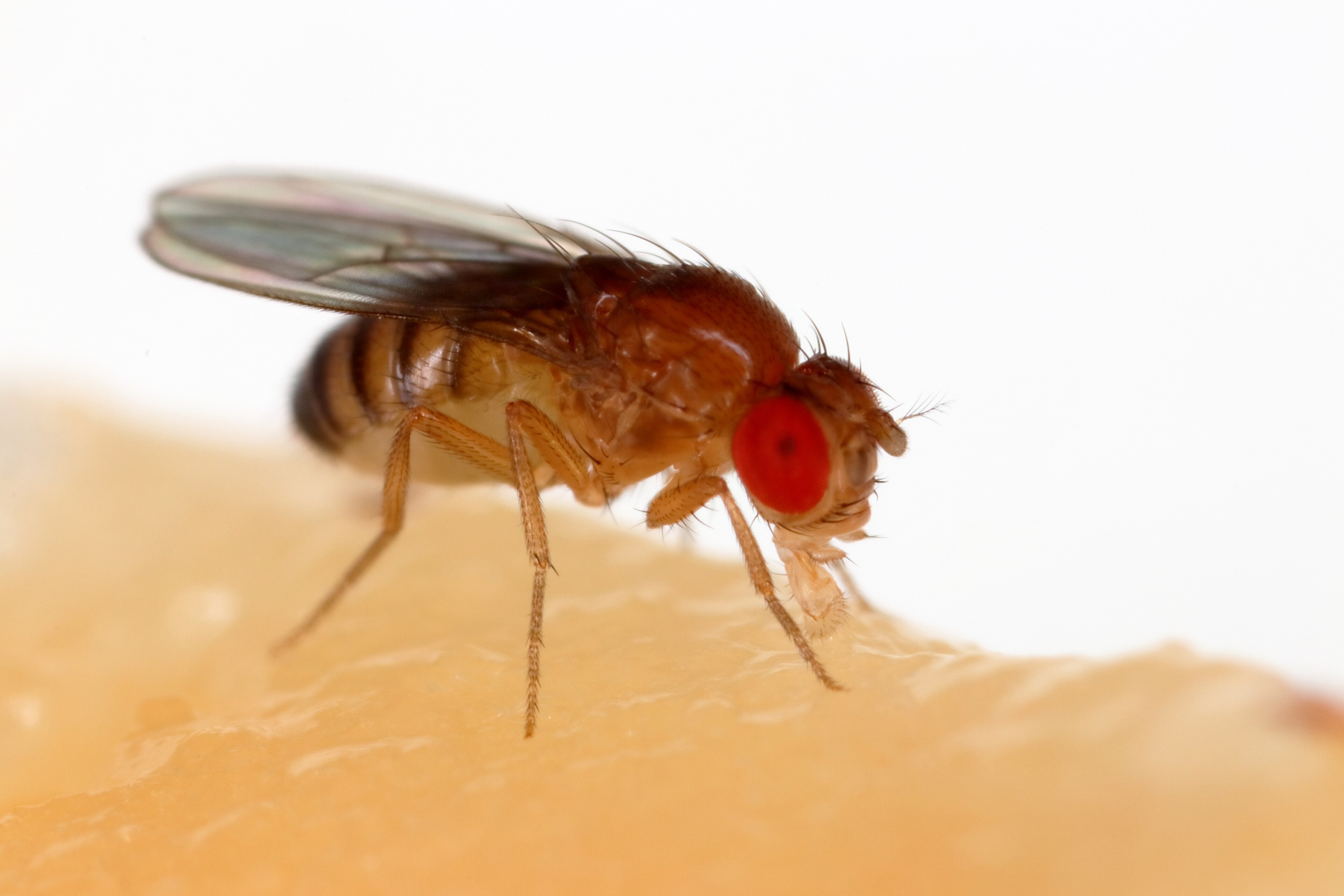
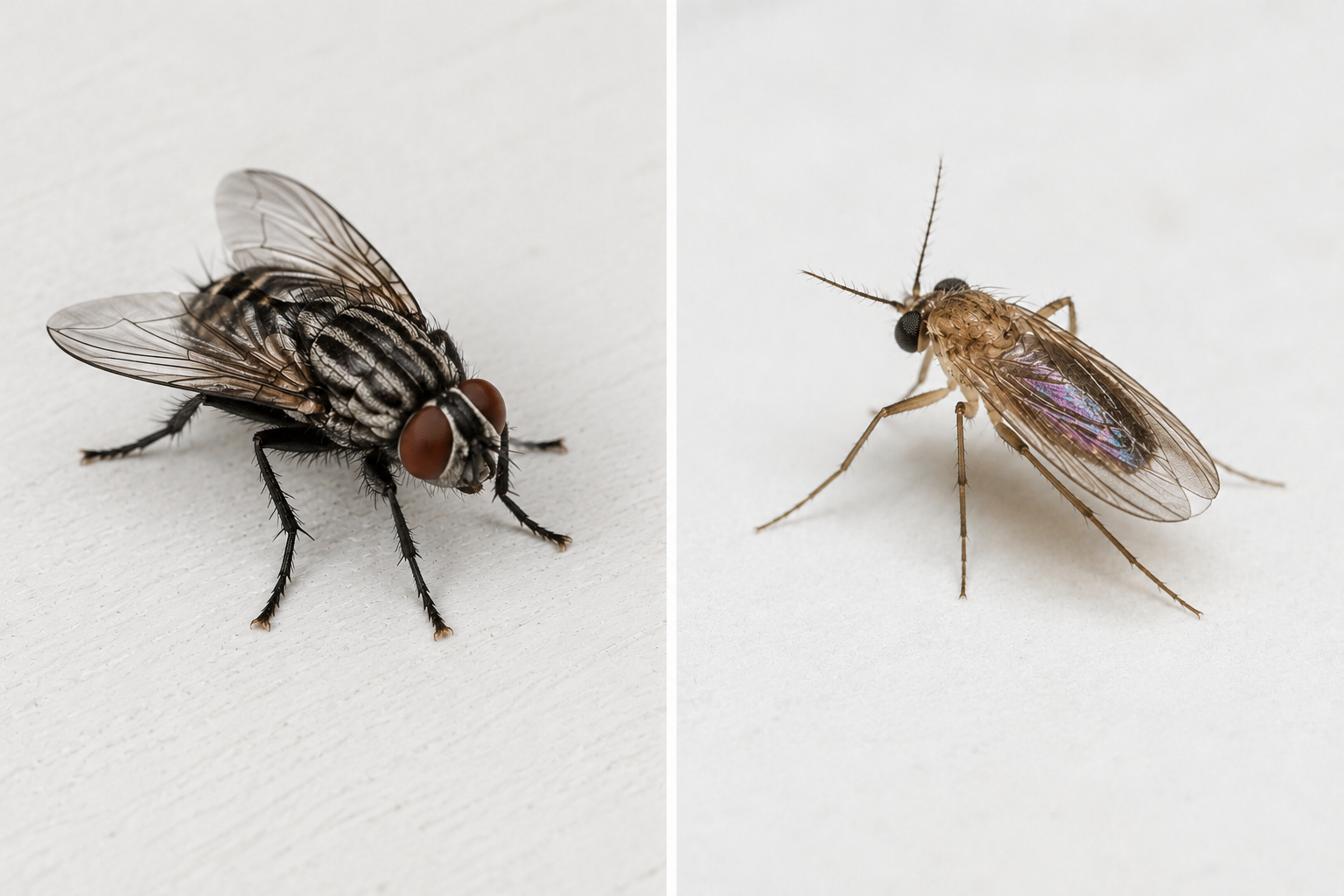
Common house flies (Musca domestica), bluebottles (Calliphora vicina), blow flies and fruit flies reproduce on any organic matter in decomposition: food waste, meat and fish, ripe fruit, bin bottoms, household waste areas, clogged siphons, potting soil for houseplants in the case of sciarids. A female can lay up to 500 eggs in several batches, and the complete cycle (egg → larva → maggot → fly) is completed in 7 to 10 days in hot weather. Professional kitchens, restaurants, butchers, covered markets, livestock farms, apartment building bin areas and backyards are the most exposed areas.
Step 3
What causes an infestation?
The appearance of a significant population almost always betrays a hygiene or storage flaw: bins not hermetically sealed, bags left out too long before collection, organic waste left on work surfaces, uncleaned siphons, faulty fridges, overly damp plant soil. Summer heat, windows/doors left open without fly screens, proximity to a bin area or food business, and the absence of UV traps in a professional kitchen eventually settle a population durably. For food industry professionals, these weaknesses are systematically noted by hygiene services (DDPP) during unannounced inspections.
Step 4
How do you recognise an infestation?
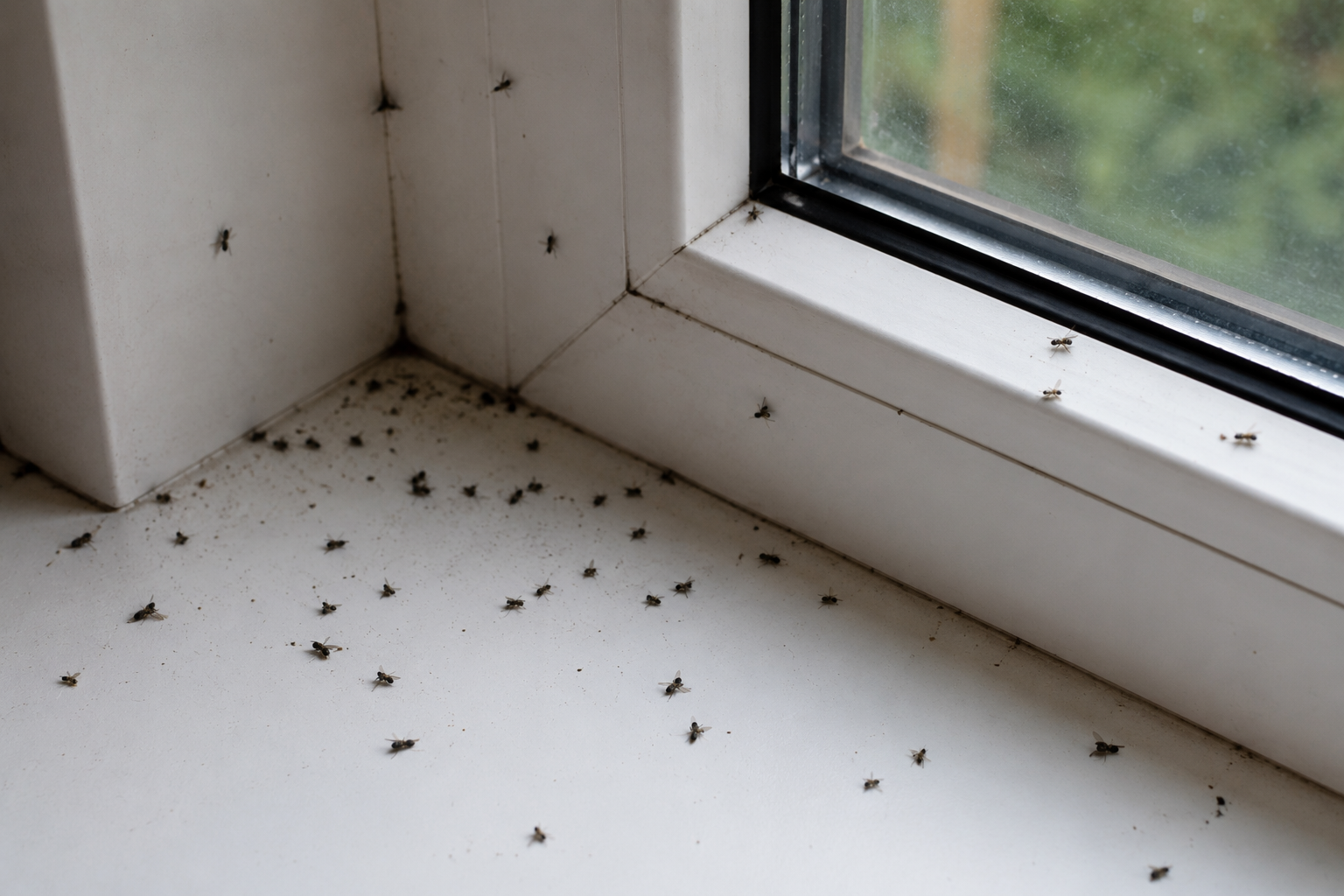
A fly invasion manifests itself suddenly: massive and sudden presence in a kitchen, bin area or backyard, accompanied by small black spots (excrement) on walls, ceilings and lampshades. In bins or around decomposing organic matter, one easily spots whitish larvae (maggots) which confirm the existence of a breeding site that must be eliminated as a priority.
Step 5
In pictures
Step 6
Where do they hide?
Flies reproduce wherever they find decomposing organic matter: bin areas and rubbish chutes, back kitchens, ceilings and infrequently cleaned corners, floors under appliances, poorly maintained siphons, and organic residues at the bottom of bins and containers. Treatment must target both flying adults and larval breeding sites to avoid immediate recurrence.
Step 7
Health and property risks
Flies deposit their excrement and microbes on any visited surface — worktops, open food, crockery, utensils — and carry E. coli, salmonella and Campylobacter. For a professional kitchen or apartment building bin area, their visible presence is a frequent reason for a non-conformity notice during hygiene inspections, with a direct impact on business.
Step 8
Our 5-step intervention
- 1
Full inspection
Complete inspection of the premises, precise identification of the pest, assessment of the infestation level and of the layout of the site in order to define the most effective intervention strategy.
- 2
Transparent quote
A detailed quote is issued before any intervention, presenting the recommended solutions, the response times and any travel costs that may apply.
- 3
Professional treatment
Intervention carried out by a certified technician using mechanical, thermal or chemical methods suited to your situation, in full compliance with current regulations.
- 4
Prevention & proofing
Identification of the causes of the infestation, tailored recommendations and, where necessary, sealing of entry points to limit the risk of re-infestation.
- 5
Follow-up & support
An intervention report is issued, along with post-treatment advice and the option to schedule a follow-up visit or a monitoring contract according to your needs.
Step 9
Flies price list — Paris & Île-de-France
Indicative prices — exact quote issued after the free diagnosis.
| Surface | Indicative price |
|---|---|
| up to 30m² | from 119 € |
| up to 60m² | from 169 € |
| up to 90m² | from 219 € |
| 120m² and above | on quote |
Step 10
How can infestations be prevented?
Strict hygiene of bin areas (floors washed, bags closed, bins cleaned with hot water), installation of fly screens on openings facing the exterior, UV light traps in production areas, rapid rotation of organic waste and regular preventive disinsection are the most effective ways to keep a population controlled all year round.
Step 11
Flies — FAQ
How long does an intervention take?
Between 1 and 4 hours depending on the surface area and the level of infestation.
Are the treatments dangerous for children and pets?
Our protocols strictly comply with regulations. A re-entry period will be specified for you.
Do you handle emergencies?
Yes, intervention within 24h across the whole of Île-de-France. Intervention 7 days a week, 24/7.
Is there a guarantee?
Yes, a results guarantee with follow-up visits included depending on the service.
What area do you cover?
Paris (75), 77, 78, 91, 92, 93, 94, 95 — the whole of Greater Paris.
Prevention and follow-up — optional add-on service
Beyond the flies treatment itself, SOS 4D Paris offers an optional scheduled follow-up visit to verify how well the protocol worked, detect any renewed activity and adjust the devices if needed. This separately invoiced service includes an inspection of the treated areas and sensitive spots, a check of the baits or traps in place, a comparative assessment and a written report handed over directly.
To prevent the pest from coming back, we identify the contributing factors specific to your home or premises — entry points, food sources, damp areas, sealing defects — and give you concrete recommendations to implement yourself. A periodic visit contract (quarterly, half-yearly or yearly) is also available on quote for long-term protection; its price depends on the chosen frequency and the site configuration.
Need a fast intervention?
Our certified technicians intervene within 24h across Paris and Île-de-France.