
Step 1
How to recognise the infestation?
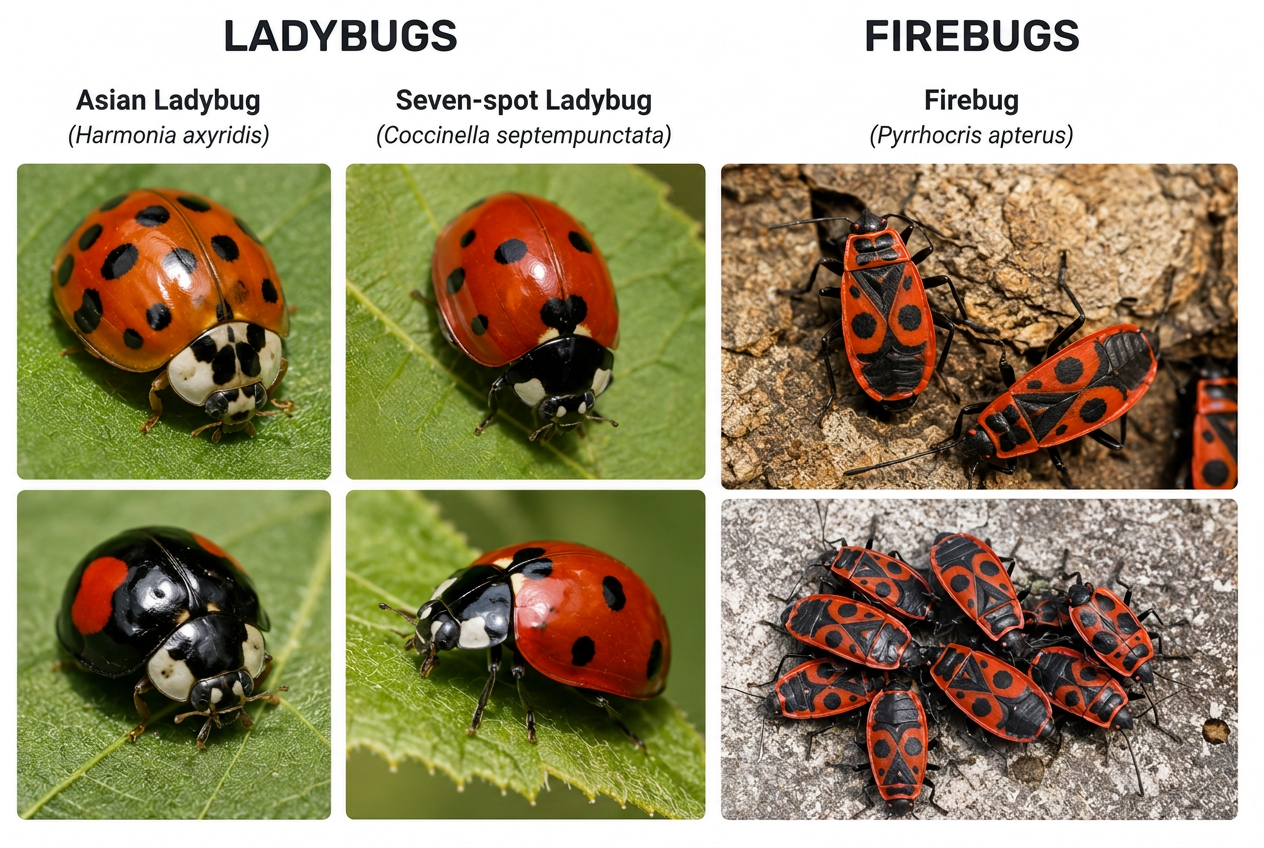
Asian ladybirds (Harmonia axyridis) gather in large numbers at the first cold snap. Drawn to sunlit facades, they accumulate on south-facing walls, around windows, under roof overhangs, in roller shutters, attics or lofts looking for a place to overwinter.
Indoors, it is not unusual to see dozens or even hundreds of individuals, mainly near openings or heat sources. When disturbed, they release a yellowish, unpleasant-smelling fluid that can leave lasting stains on walls, curtains, furniture and coverings.
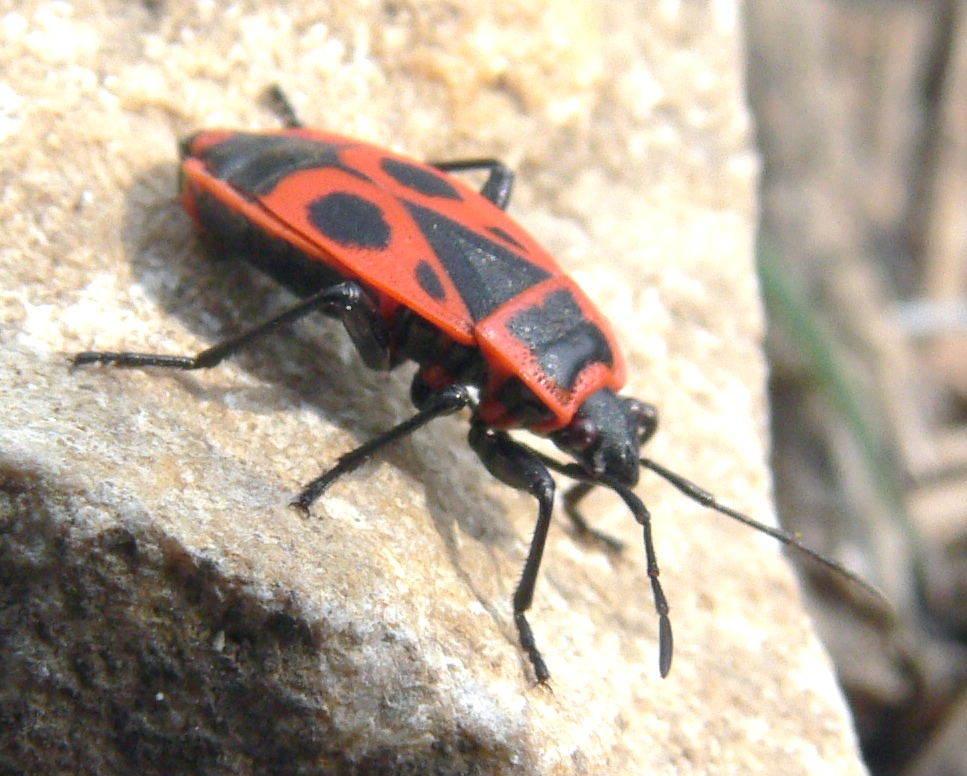
Firebugs (Pyrrhocoris apterus) are easily recognised by their bright red and black colour. They live in very large colonies at the foot of trees, along low walls, terraces, garden borders or against sun-exposed facades. Although they rarely enter homes, their high concentration can become particularly unsightly.
Step 2
Why is it dangerous?
The Asian ladybird is an invasive species accidentally introduced into Europe. Highly competitive, it threatens local ladybird species and can cause significant nuisance in homes.
An infestation may lead to:
- staining caused by the defensive fluid they secrete;
- marks that are difficult to remove from walls, curtains and textiles;
- allergic reactions in some people (skin irritation, rhinitis, asthma attacks);
- a massive presence that is especially disruptive in living areas.
Firebugs, on the other hand, are virtually harmless to humans. They do not bite, do not transmit diseases and do not damage buildings. However, when they gather in the hundreds or thousands, they represent a significant visual nuisance and can invade terraces, balconies, facades or house entrances. Their presence often reveals favourable settling areas that are best treated before winter to prevent proliferation.
In pictures
The pest and infestation signs
Step 3
Our intervention method
- 1
Inspection of gathering areas
Locating south-facing facades, window frames, attics and sunlit ledges.
- 2
Mechanical vacuuming
Live colonies removed with a dedicated vacuum, without crushing (Asian ladybirds release a staining fluid).
- 3
Residual outdoor spraying
Application to south facades, frames and attics in September/October, before the autumn aggregation.
- 4
Access sealing
Window gaps, air vents and cracks sealed to block winter entry.
Pricing
Price list ladybirds & firebugs
Indicative pricing — exact quote issued after free diagnosis.
| Surface | Indicative price |
|---|---|
| up to 30m² | from 119 € |
| up to 60m² | from 169 € |
| up to 90m² | from 219 € |
| 120m² and above | on quote |
Step 4
Why trust us
Certibiocide technicians
Issued by a body approved by the French Ministry of Ecological Transition.
NF EN 16636 compliant
European standard for professional pest management.
On-site within 2 hours in Paris
Intervention 7 days a week, 24/7.
Written results warranty
Follow-up visits included and detailed intervention report.
Prevention
How to prevent re-infestation
To avoid another autumn invasion, sealing gaps and cracks before autumn, fitting screens on south-facing windows, vacuuming (never crushing) isolated individuals and having facades treated preventively in September strongly reduce the risk.
FAQ
Frequently asked questions — Ladybirds & firebugs
Are they really pests?
The Asian ladybird is invasive and occasionally bites. Firebugs are mostly an aesthetic nuisance.
Do you offer emergency intervention?
Yes, within 2 hours in Paris and 24 hours across the Île-de-France region. Intervention 7 days a week, 24/7.
Are your treatments safe for my family?
Our protocols strictly comply with regulations. A re-entry delay is specified depending on the product used.
Is the quote free?
Yes, diagnosis and quote are free and non-binding.
Request your free quote* for ladybirds & firebugs
Our team will contact you within 24 hours to schedule the intervention.