

Step 1
How to recognise the infestation?
A stone marten generally settles in attics or under roofs where it finds warmth, quiet and easy access. Its presence often shows through footsteps, running or scratching sounds, mainly during the night or in the early morning.
You may also observe:
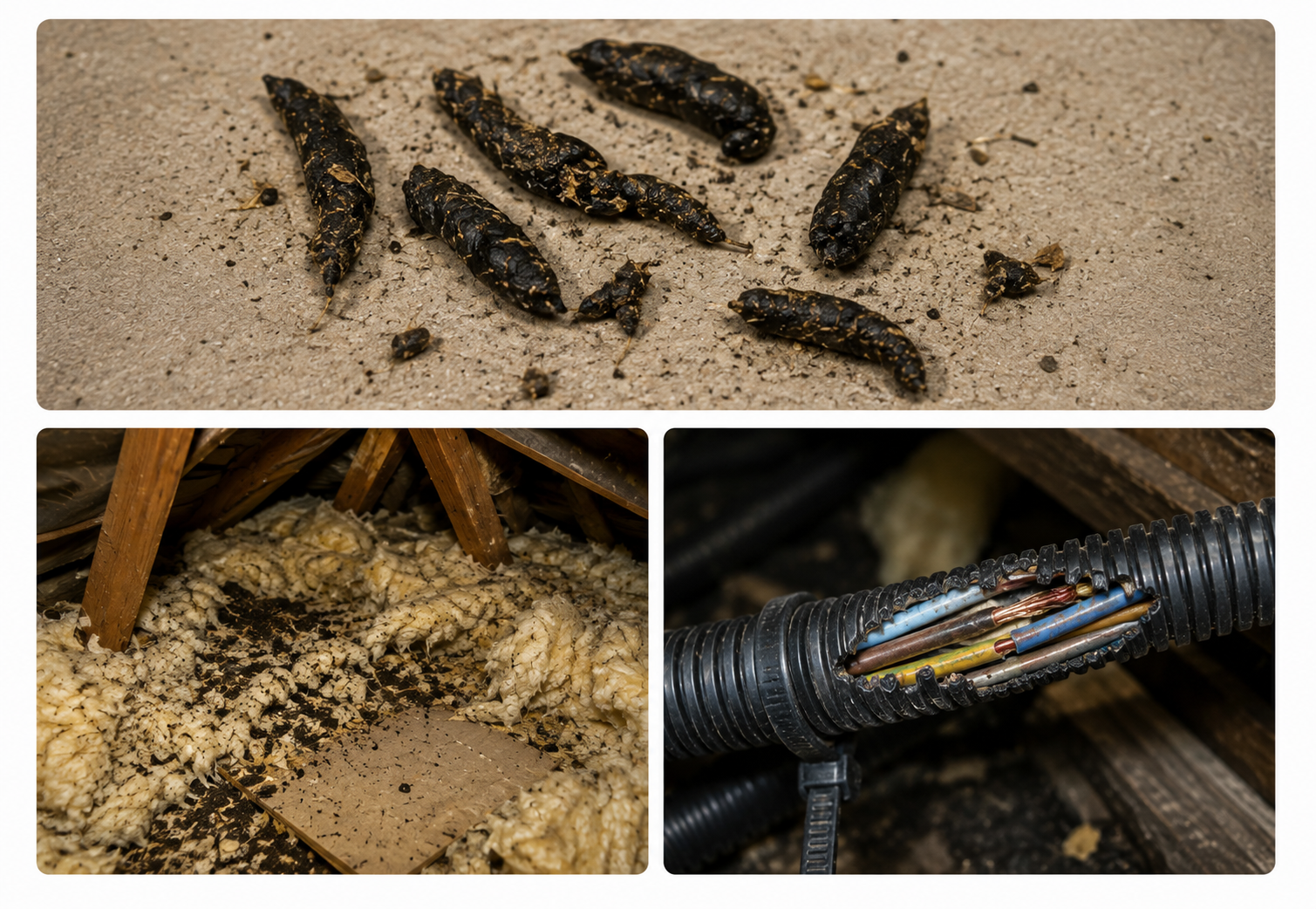
- elongated black droppings in attics or near access points;
- a strong odour from droppings and urine;
- insulation materials moved or torn out to build a nest;
- tracks on beams or roof tiles;
- cables, ducts or hoses gnawed, particularly on vehicles parked nearby.
It is not uncommon for a stone marten to regularly use the same route to reach the roof via a gutter, a tree or a wall.
Step 2
Why is it dangerous?
The stone marten is generally not aggressive towards humans, but its presence in a building can lead to many nuisances.
It may cause:
- significant noise nuisance during the night;
- damage to attic thermal insulation;
- damage to electrical conduits, cables and pipes;
- water infiltration linked to roof damage;
- persistent odours from droppings or prey carcasses.
The stone marten is also known to gnaw hoses, electrical cables and vehicle insulation, sometimes causing very costly repairs.
A protected species in certain situations, the stone marten cannot be freely destroyed. Interventions must comply with regulations in force and prioritise deterrence solutions, capture where authorised, and securing of access points to prevent any re-establishment.
In pictures
The pest and infestation signs

Step 3
Our intervention method
- 1
Attic and roof inspection
Locating access points (displaced tiles, skylights, gutters), nest and olfactory marking zones.
- 2
Deterrence by repellents
Olfactory diffusers and ultrasonic emitters to push the animal out of the premises without harm (protected species).
- 3
Cleaning and disinfection
Removal of droppings and urine, enzymatic disinfection to erase marking and prevent return.
- 4
Sealing and anti-intrusion grilles
Definitive closure of all roof accesses > 5 cm once the animal has confirmed departure.
Pricing
Price list stone martens
Indicative pricing — exact quote issued after free diagnosis.
| Treatment | Price |
|---|---|
| Tailor-made intervention | on quote |
Step 4
Why trust us
Certibiocide technicians
Issued by a body approved by the French Ministry of Ecological Transition.
NF EN 16636 compliant
European standard for professional pest management.
On-site within 2 hours in Paris
Intervention 7 days a week, 24/7.
Written results warranty
Follow-up visits included and detailed intervention report.
Prevention
How to prevent re-infestation
To avoid a new settlement, sealing all roof accesses larger than 5 cm, pruning trees and branches in contact with the roof, lighting access zones at night and using olfactory repellents preventively is the most effective combination.
FAQ
Frequently asked questions — Stone martens
Can a stone marten be killed?
No, the stone marten is protected. We only use repellents and access sealing, without harming it.
Do you offer emergency intervention?
Yes, within 2 hours in Paris and 24 hours across the Île-de-France region. Intervention 7 days a week, 24/7.
Are your treatments safe for my family?
Our protocols strictly comply with regulations. A re-entry delay is specified depending on the product used.
Is the quote free?
Yes, diagnosis and quote are free and non-binding.
Request your free quote* for stone martens
Our team will contact you within 24 hours to schedule the intervention.