
Step 1
Our treatments against ants
To eradicate an ant colony, one must reach the queen. Our protocols rely on slow-acting gel baits that workers bring back to the nest, supplemented by perimeter spraying outdoors when the pressure comes from the garden or neighboring areas, and by targeted injection into galleries for carpenter ants.
Slow-acting bait gel
Application of insecticide gel (Spinosad, Fipronil) on ant trails. Workers bring the bait to the queen, which eliminates the entire colony in 7 to 14 days.
Perimeter spraying
Treatment of the exterior barrier (facades, foundations, decks) to prevent recolonization from the garden or neighboring areas.
Targeted carpenter ant treatment
Injection of insecticide powder directly into galleries hollowed out in the wood. Essential to stop structural damage.
Step 2
Habitat and behaviour of ants
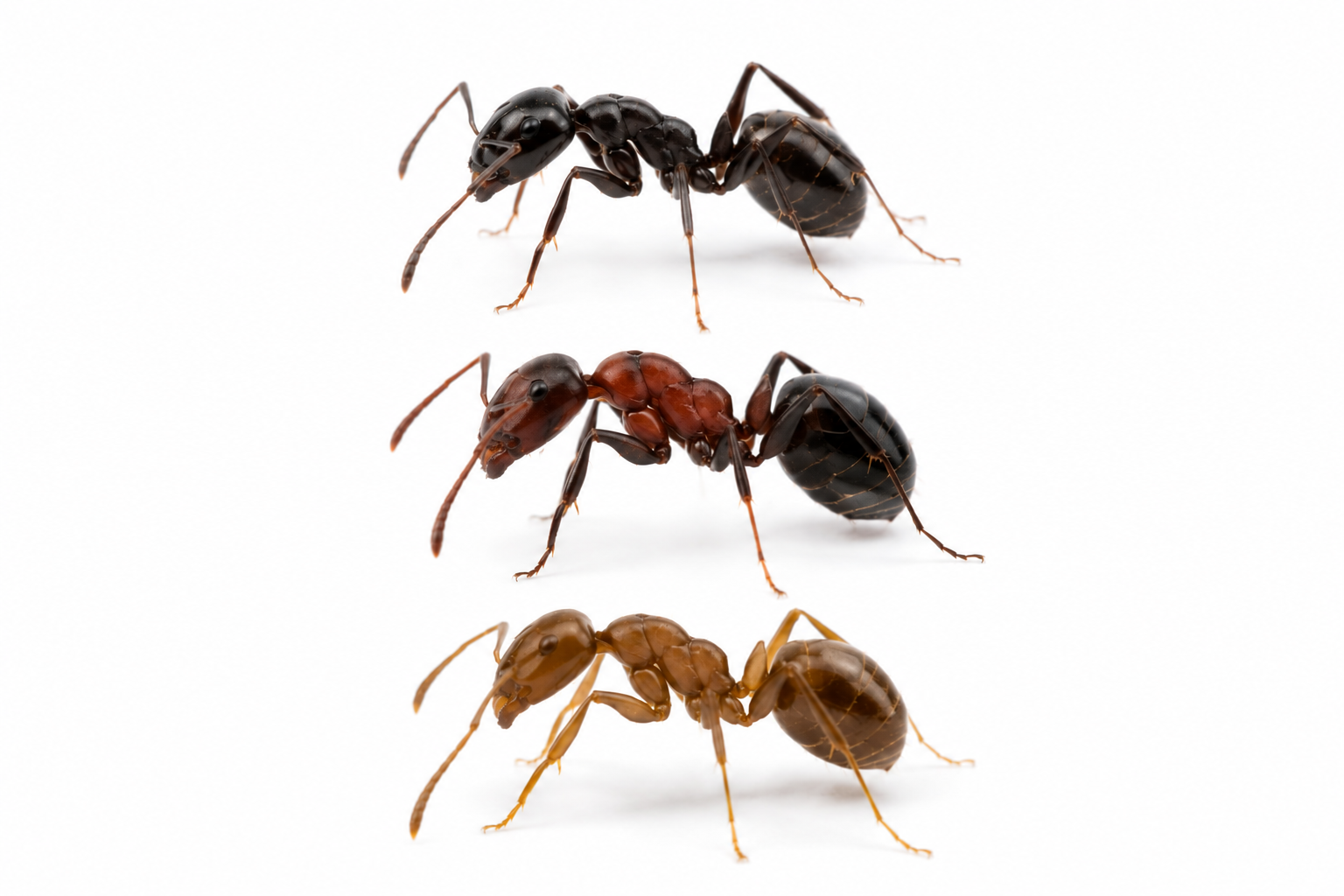
Ants live in organized colonies of several hundred to several thousand individuals around one or more queens, installed in invisible nests: under a kitchen tile, in a partition wall, behind a skirting board, in a planter box, under a wooden deck, or in the heart of a hollow wall. The workers seen in single file represent only a tiny part of the colony: they only come out to bring food to the nest. In Paris and the suburbs, one mainly encounters the black garden ant (Lasius niger) in spring, the pharaoh ant (Monomorium pharaonis) in heated indoor areas year-round — particularly difficult to eradicate because colonies split upon contact with insecticides — and the Argentine ant, a very aggressive invasive species.
Step 3
What causes an infestation?
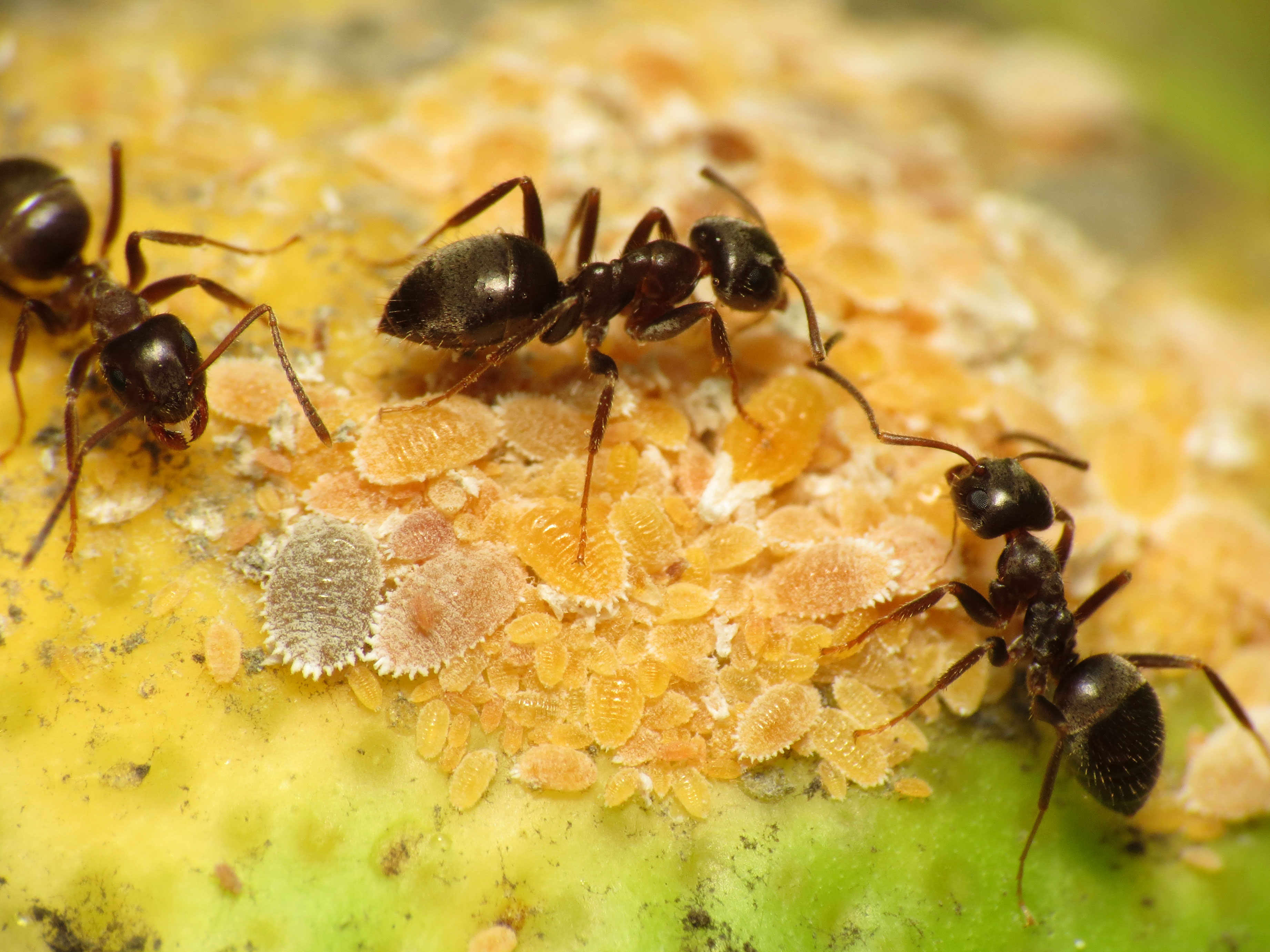
An invasion almost always begins with the discovery of an accessible sweet or fatty food source: an unsealed jar of jam, crumbs under the toaster, a pet's bowl, overripe fruit, syrup on a worktop. Workers then mark the path with pheromones, which creates the characteristic uninterrupted columns. Facade cracks, degraded window joints, pipe passages, and old conduits are the usual entry points, especially in spring when fertilized queens search for a nesting site. The presence of aphids on balcony or garden plants also attracts certain species that farm their colonies to harvest their honeydew.
Step 4
How do you recognise an infestation?
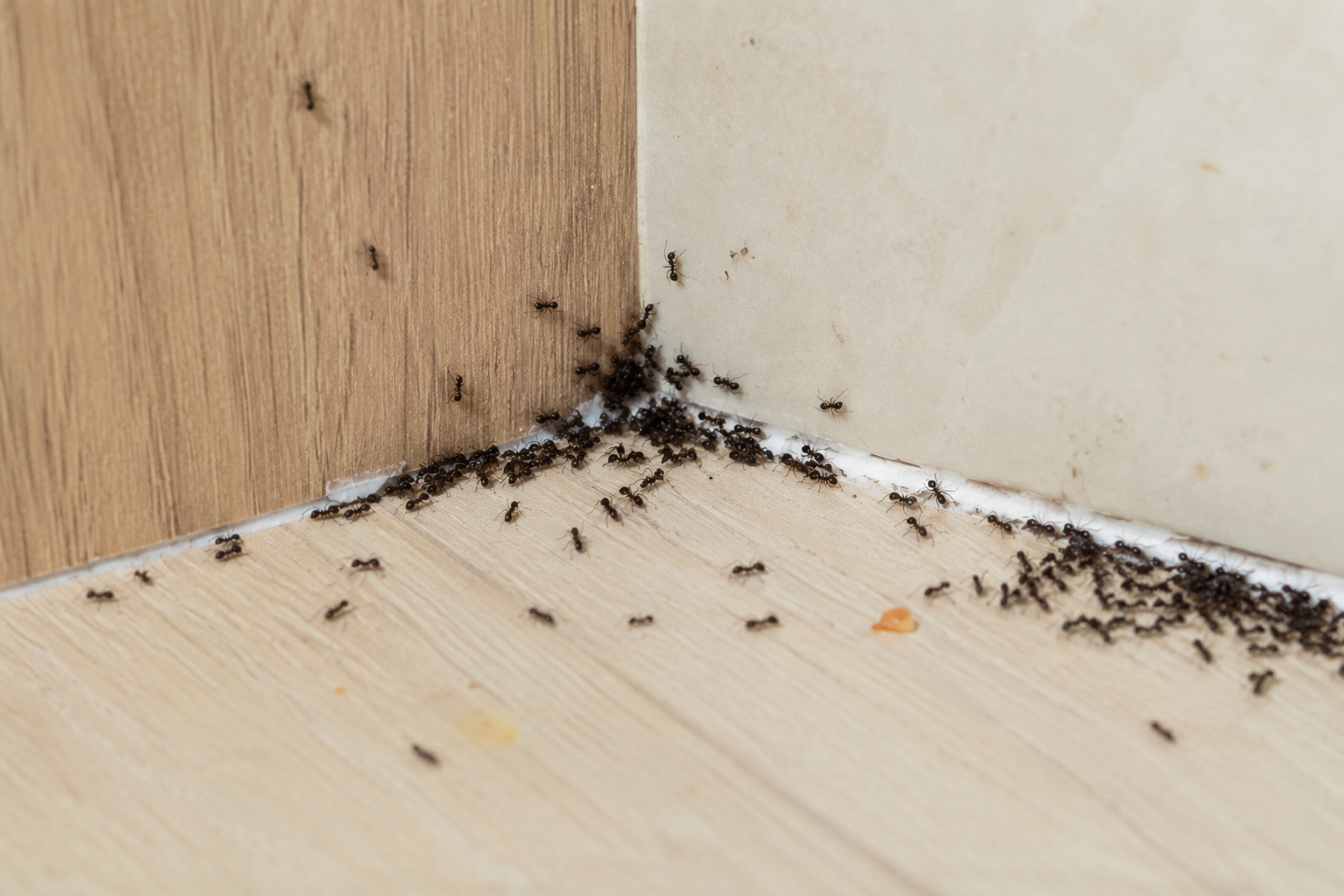
A few isolated ants on a worktop are almost always scouts: a few days later, a continuous line appears following a precise path along a skirting board or tiling joint. Depending on the species, one also discovers piles of blonde sawdust at the foot of woodwork (carpenter ants), a sandy anthill against the facade, or tiny yellow workers scattered in the bathroom (pharaoh ants). In spring, the appearance of winged individuals indoors signals an already mature colony.
Step 5
In pictures
Step 6
Where do they hide?
Ants establish themselves in temperate and sheltered areas: under the sink and behind skirting boards, in window frames, inside hollow walls, under outdoor tiles and decks, and within plant pots. Precisely identifying the mother anthill is essential, because destroying only the visible workers leaves the queen intact, and the colony reforms in a few weeks.
Step 7
Health and property risks
Ants crawl indiscriminately through bins, pipes, and over food: they quickly contaminate sugars, jams, and starchy foods, which poses a real problem in medical and catering environments — the pharaoh ant is notably known as a vector of bacteria in hospital settings. Carpenter ants silently hollow out structural wood and can weaken frameworks, decks, and woodwork after several years.
Step 8
Our 5-step intervention
- 1
Full inspection
Complete inspection of the premises, precise identification of the pest, assessment of the infestation level and of the layout of the site in order to define the most effective intervention strategy.
- 2
Transparent quote
A detailed quote is issued before any intervention, presenting the recommended solutions, the response times and any travel costs that may apply.
- 3
Professional treatment
Intervention carried out by a certified technician using mechanical, thermal or chemical methods suited to your situation, in full compliance with current regulations.
- 4
Prevention & proofing
Identification of the causes of the infestation, tailored recommendations and, where necessary, sealing of entry points to limit the risk of re-infestation.
- 5
Follow-up & support
An intervention report is issued, along with post-treatment advice and the option to schedule a follow-up visit or a monitoring contract according to your needs.
Step 9
Ants price list — Paris & Île-de-France
Indicative prices — exact quote issued after the free diagnosis.
| Surface | Indicative price |
|---|---|
| up to 30m² | from 119 € |
| up to 60m² | from 169 € |
| up to 90m² | from 219 € |
| 120m² and above | on quote |
Step 10
How can infestations be prevented?
To prevent their return, it is better to remove any accessible sugary source, seal window surroundings and plug skirting board cracks, and maintain the garden near the building to keep outside colonies away. Inspecting structural wood every two or three years allows for the timely detection of carpenter ant installation before damage becomes visible.
Step 11
Ants — FAQ
How long does an intervention take?
Between 1 and 4 hours depending on the surface area and the level of infestation.
Are the treatments dangerous for children and pets?
Our protocols strictly comply with regulations. A re-entry period will be specified for you.
Do you handle emergencies?
Yes, intervention within 24h across the whole of Île-de-France. Intervention 7 days a week, 24/7.
Is there a guarantee?
Yes, a results guarantee with follow-up visits included depending on the service.
What area do you cover?
Paris (75), 77, 78, 91, 92, 93, 94, 95 — the whole of Greater Paris.
Prevention and follow-up — optional add-on service
Beyond the ants treatment itself, SOS 4D Paris offers an optional scheduled follow-up visit to verify how well the protocol worked, detect any renewed activity and adjust the devices if needed. This separately invoiced service includes an inspection of the treated areas and sensitive spots, a check of the baits or traps in place, a comparative assessment and a written report handed over directly.
To prevent the pest from coming back, we identify the contributing factors specific to your home or premises — entry points, food sources, damp areas, sealing defects — and give you concrete recommendations to implement yourself. A periodic visit contract (quarterly, half-yearly or yearly) is also available on quote for long-term protection; its price depends on the chosen frequency and the site configuration.
Need a fast intervention?
Our certified technicians intervene within 24h across Paris and Île-de-France.