Step 1
Our treatments against food moths
Treatment of food moths requires a complete clearance of infested goods before any intervention. Next comes residual spraying on cupboard bottoms and joints, followed by ULV nebulisation to reach volumes and hard-to-reach recesses. A follow-up visit on the client's request after 21 days confirms the breaking of the reproductive cycle.
Clearance and sorting of goods
Removal of infested goods, meticulous inspection of cupboards and recommendation to discard contaminated products. This step is indispensable before any treatment.
Residual spraying (TP18)
Application of an authorised TP18 biocidal product on at-risk zones (cupboards, shelves, hinges, cracks and interstices) to eliminate larvae and adult insects whilst ensuring residual protection.
ULV Nebulisation
Diffusion of an ultra-fine mist allowing for effective treatment of volumes and hard-to-access zones. This method complements spraying by targeting adult insects present in the premises.
Step 2
Habitat and behaviour of food moths
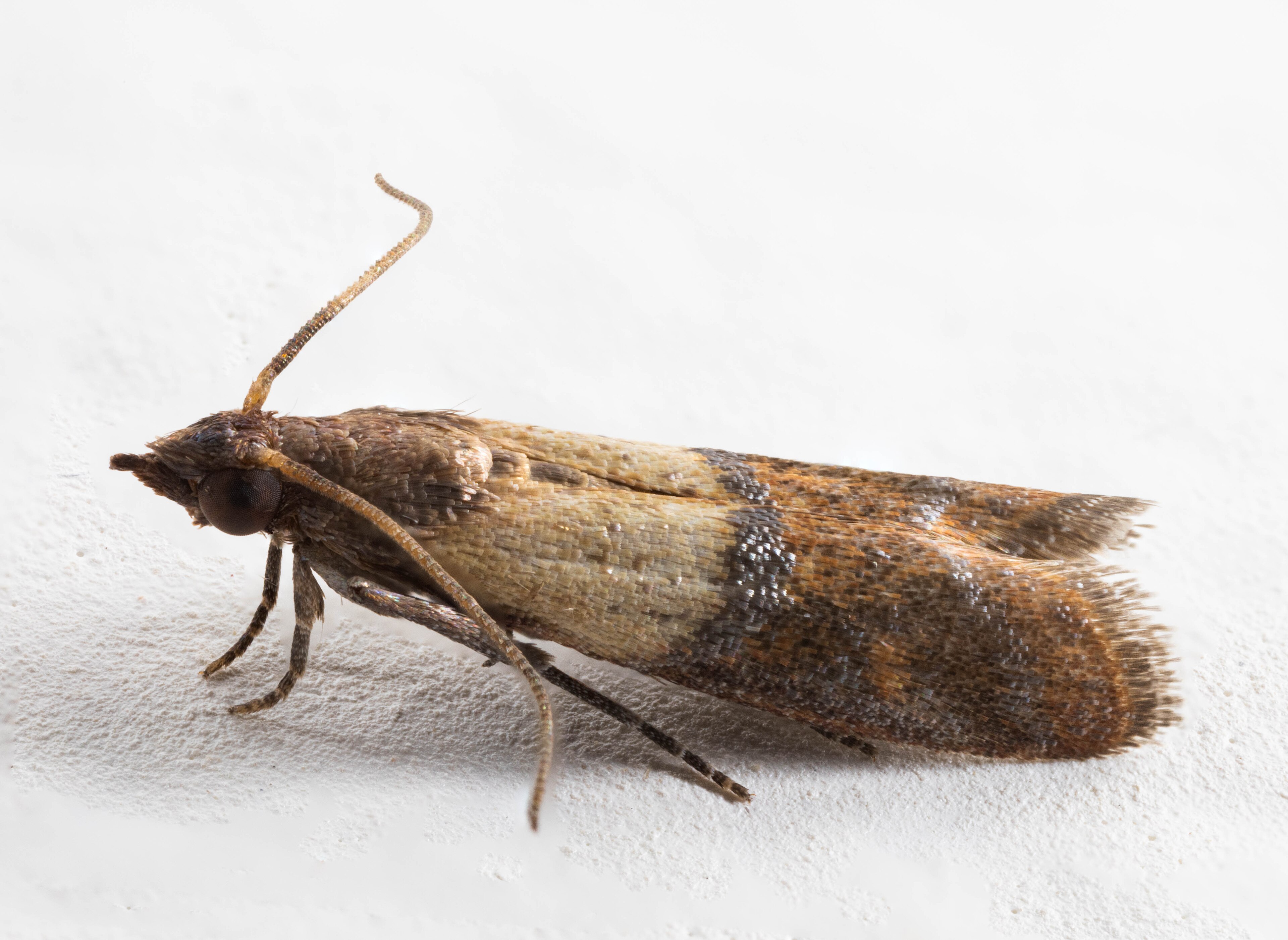
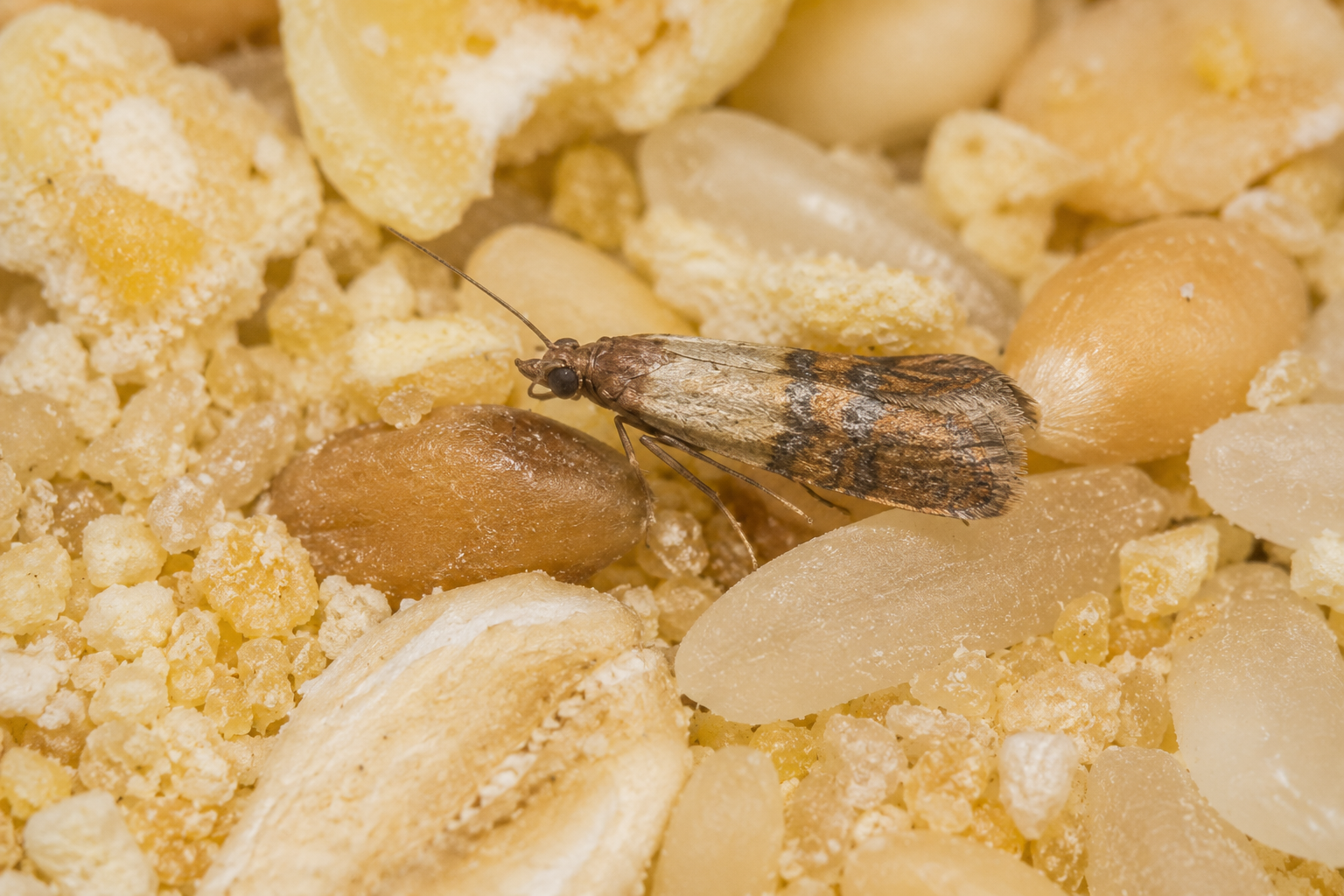
The Indian meal moth (Plodia interpunctella) and the flour moth (Ephestia kuehniella) are small grey-brown moths measuring 1 to 2 cm that lay directly in dry goods: flour, semolina, rice, pasta, breakfast cereals, dried fruit, chocolate, biscuits, spices, pet food, birdseed. The eggs hatch into whitish caterpillars that weave characteristic silky threads between grains, in cupboard corners and under lids. The complete cycle takes place in 4 to 6 weeks at 20–25°C: a single contaminated package can therefore generate several generations before the first moths are seen flying in the kitchen.
Step 3
What causes an infestation?
Introduction almost always occurs via a product already contaminated at purchase — the eggs being invisible to the naked eye — especially with bulk goods, paper bags or poorly sealed packaging (self-service grocers, organic stores, markets). The conditions favouring proliferation are then easy to meet: long-term storage without stock rotation, cupboards rarely cleaned thoroughly, ambient temperatures of 20 to 30°C, opened packets left open, crumbs accumulated at the bottom of drawers and behind jars. In catering and patisserie, the risk is aggravated by large packaging and difficult-to-access storage zones, which delay detection.
Step 4
How do you recognise an infestation?
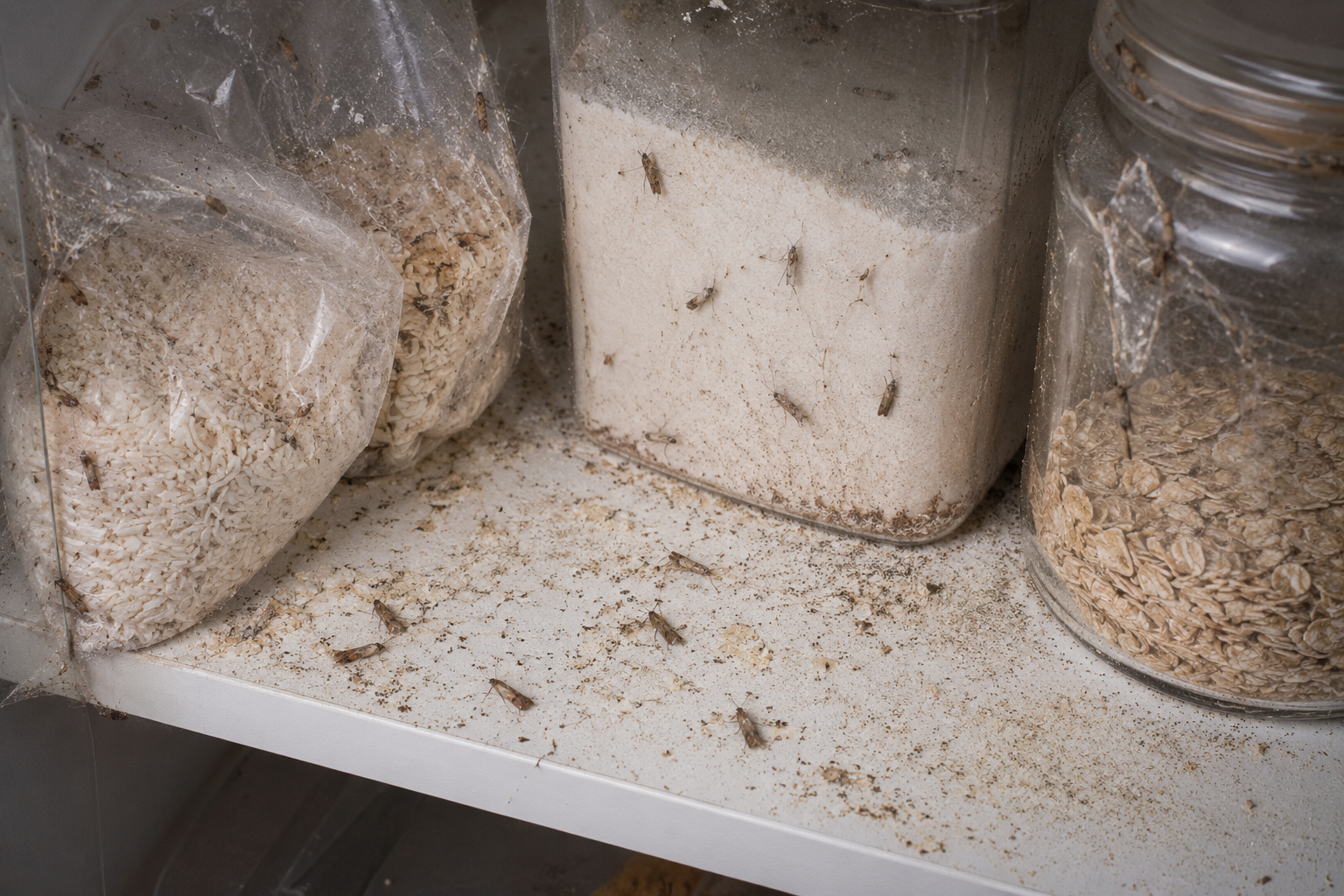
Food moths invade dry goods stored in cupboards: flour, rice, pasta, cereals, dried fruit, chocolate, seeds, pet food or spices. Their presence is noticed by small grey-brown moths flying slowly in the kitchen, silky threads inside packaging, whitish larvae or heaps of cocoons in cupboard corners and under jar lids. Even after throwing away contaminated food, new moths often continue to appear if the source has not been eliminated.
Step 5
In pictures
Step 6
Where do they hide?
Food moths colonise areas of dry, temperate storage: kitchen cupboards and back kitchens, pantries and cellars, attics, shelves behind forgotten products, cold rooms and professional reserves. They also settle in recesses behind furniture, which explains why simple surface cleaning is never enough to eliminate them.
Step 7
Health and property risks
Food moths contaminate goods through their larvae, silky threads, excrement and cocoons. Infested food becomes unfit for consumption and must be thrown away. In food businesses, bakeries, restaurants or the food industry, their presence can lead to significant losses, damage the establishment's image and cause non-compliance during hygiene inspections. An untreated infestation spreads rapidly to all food reserves.
Step 8
Our 5-step intervention
- 1
Full inspection
Complete inspection of the premises, precise identification of the pest, assessment of the infestation level and of the layout of the site in order to define the most effective intervention strategy.
- 2
Transparent quote
A detailed quote is issued before any intervention, presenting the recommended solutions, the response times and any travel costs that may apply.
- 3
Professional treatment
Intervention carried out by a certified technician using mechanical, thermal or chemical methods suited to your situation, in full compliance with current regulations.
- 4
Prevention & proofing
Identification of the causes of the infestation, tailored recommendations and, where necessary, sealing of entry points to limit the risk of re-infestation.
- 5
Follow-up & support
An intervention report is issued, along with post-treatment advice and the option to schedule a follow-up visit or a monitoring contract according to your needs.
Step 9
Food moths price list — Paris & Île-de-France
Indicative prices — exact quote issued after the free diagnosis.
| Surface | Indicative price |
|---|---|
| up to 30m² | from 119 € |
| up to 60m² | from 169 € |
| up to 90m² | from 219 € |
| 120m² and above | on quote |
Step 10
How can infestations be prevented?
Before any treatment, all infested goods must be thrown away and cupboard bottoms cleaned with a vacuum. On a daily basis, storing flour, cereals and dried fruit in airtight jars, inspecting packaging at purchase (presence of webs or eggs), maintaining rapid stock rotation and regularly cleaning recesses makes any new infestation very unlikely.
Step 11
Food moths — FAQ
How long does an intervention take?
Between 1 and 4 hours depending on the surface area and the level of infestation.
Are the treatments dangerous for children and pets?
Our protocols strictly comply with regulations. A re-entry period will be specified for you.
Do you handle emergencies?
Yes, intervention within 24h across the whole of Île-de-France. Intervention 7 days a week, 24/7.
Is there a guarantee?
Yes, a results guarantee with follow-up visits included depending on the service.
What area do you cover?
Paris (75), 77, 78, 91, 92, 93, 94, 95 — the whole of Greater Paris.
Prevention and follow-up — optional add-on service
Beyond the food moths treatment itself, SOS 4D Paris offers an optional scheduled follow-up visit to verify how well the protocol worked, detect any renewed activity and adjust the devices if needed. This separately invoiced service includes an inspection of the treated areas and sensitive spots, a check of the baits or traps in place, a comparative assessment and a written report handed over directly.
To prevent the pest from coming back, we identify the contributing factors specific to your home or premises — entry points, food sources, damp areas, sealing defects — and give you concrete recommendations to implement yourself. A periodic visit contract (quarterly, half-yearly or yearly) is also available on quote for long-term protection; its price depends on the chosen frequency and the site configuration.
Need a fast intervention?
Our certified technicians intervene within 24h across Paris and Île-de-France.