Step 1
Our treatments against pigeons
Bird control does not kill pigeons: it consists of preventing them from landing and nesting on your buildings using discreet and durable mechanical devices, in compliance with the Environment Code. SOS 4D Paris installs and maintains all systems recognised in France.
Cleaning & disinfection of droppings
Mechanical removal of droppings, nests and debris, followed by professional disinfection using appropriate biocidal products to eliminate bacteria, viruses and fungi that may be present. Odour neutralisation and restoration of surfaces before any protection.
Professional repellent
Application of a professional repellent adapted to strengthen the protection of sensitive areas and limit the return of pigeons. This solution is used in addition to physical devices when the layout of the site requires it.
Stainless steel anti-pigeon spikes
Installation of professional-grade 304 stainless steel spikes preventing pigeons from landing on sills, ledges, signs, air conditioners, railings and other exposed surfaces. A durable, discreet solution that is safe for birds.
Protection nets
Installation of high-resistance UV-treated polyethylene nets to durably protect inner courtyards, balconies, loggias, glass roofs, frameworks and other sensitive areas against pigeon intrusion.
Step 2
Habitat and behaviour of pigeons
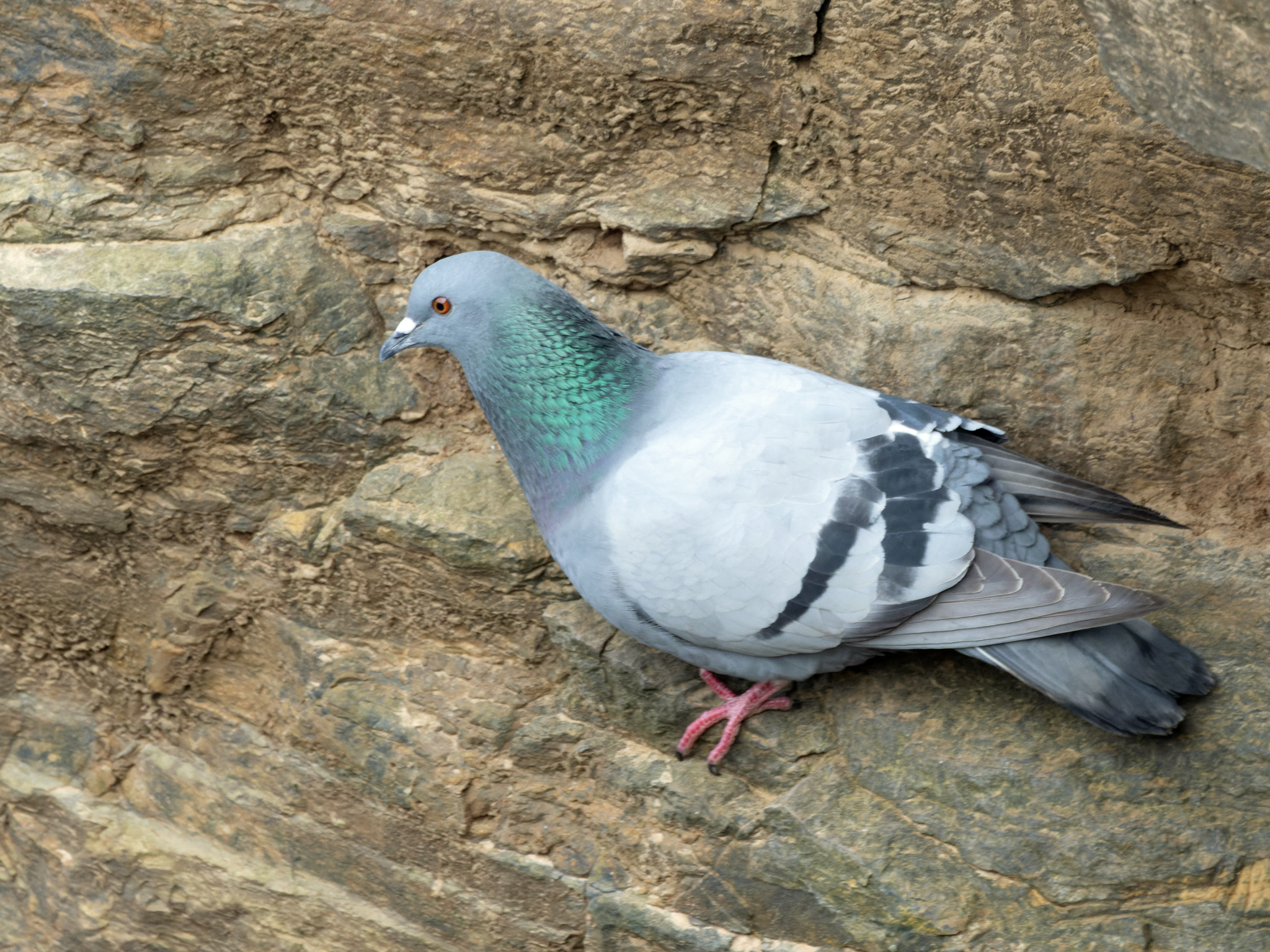
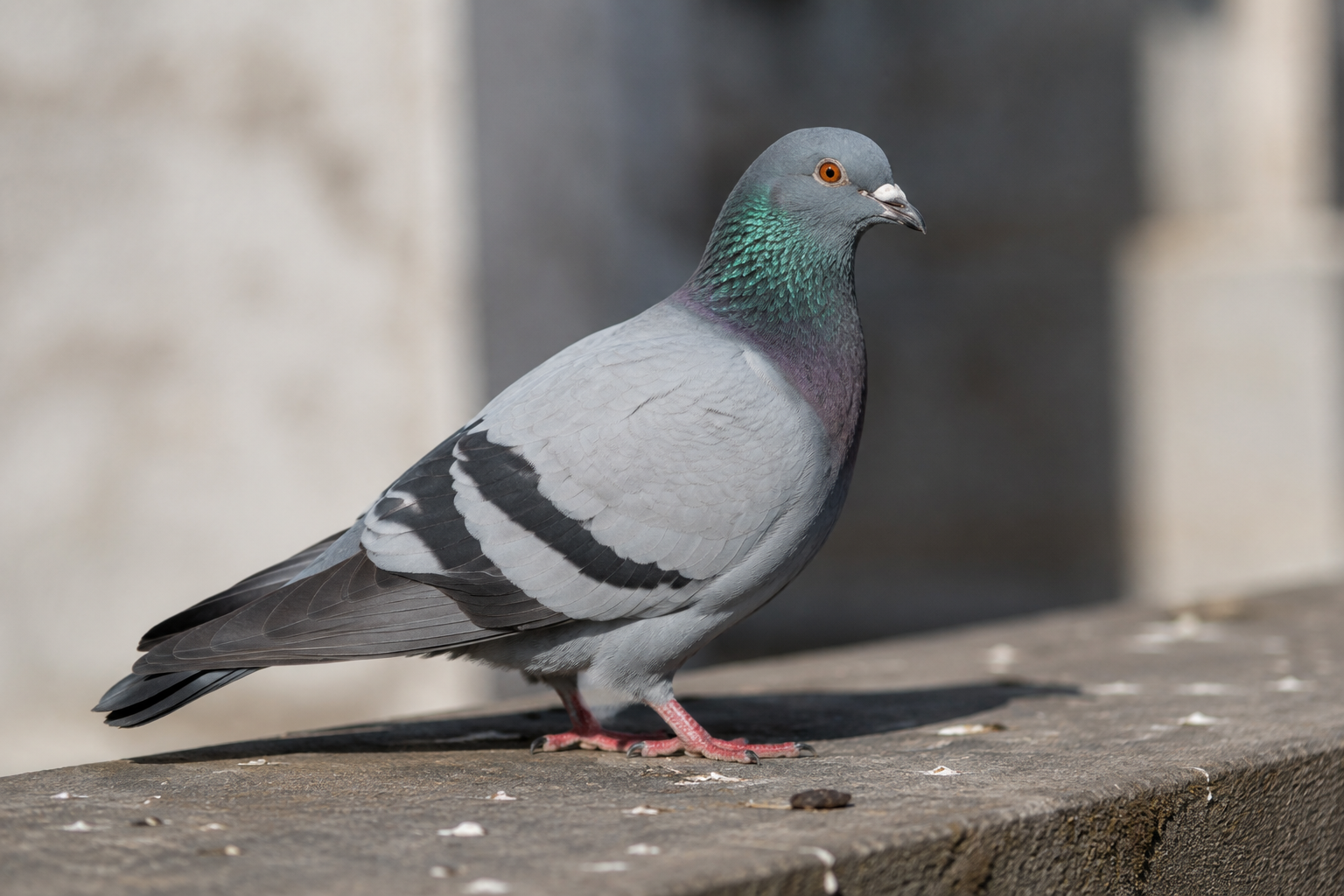
The urban feral pigeon (Columba livia) descends from the rock dove: it has transposed its cliff-nesting behaviours onto ledges, balconies, window sills, roof undersides, open attics, outdoor air conditioning units and courtyard sills. Highly gregarious, it lives in colonies fixed to a neighbourhood year-round and remains loyal to its landing site: a pair can produce up to six broods per year if food is abundant. Once settled, pigeons return by instinct to the same ledge, even after a simple cleaning, which explains the systematic failure of solutions without mechanical devices.
Step 3
What causes an infestation?
Three factors maintain Parisian colonies: food availability (feeding by residents — although prohibited by municipal decree — restaurant terrace scraps, open bins, crumbs outside bakeries), the multiplication of favourable nesting sites (Haussmann facades with ledges, little-used balconies, high-level air conditioners, interrupted renovations, open construction sites) and the almost total absence of natural predators in the city. Added to this is a collective attraction effect: an already occupied area leaves olfactory traces (droppings, feathers, nesting hormones) that quickly attract new individuals if the site is not disinfected before installing a device.
Step 4
How do you recognise an infestation?
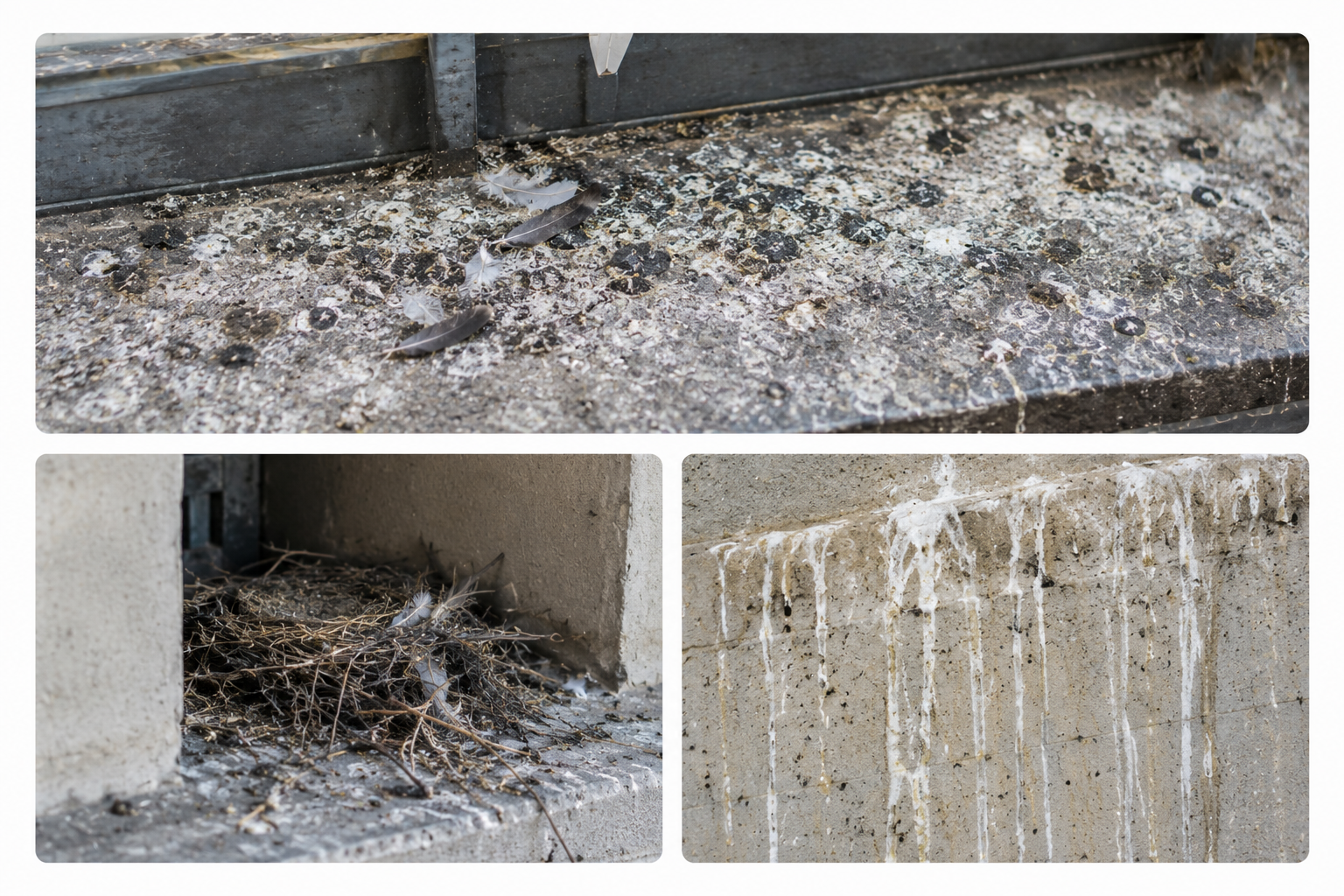
Pigeon colonisation is very visible: rapid accumulation of acidic droppings on ledges, balconies and pavements, continuous cooing at the same time, feathers and nest twigs stuck in gutters, dark stains on facades under landing areas. Eventually, damage to zinc and stone is observed, as well as a progressive blockage of rainwater downpipes which can cause leaks in upper floors.
Step 5
In pictures
Step 6
Where do they hide?
Pigeons look for flat surfaces sheltered from the wind and out of reach of predators: ledges and roof edges, little-used balconies, open attics, tops of outdoor air conditioners, inner courtyards and light wells. Precise mapping of these areas is essential before any installation, as a poorly positioned device simply moves the colony to a neighbouring point without deterring it.
Step 7
Health and property risks
Pigeon droppings are highly acidic: they permanently attack stone, zinc and facade paint, and block gutters and channels to the point of causing costly leaks. They also carry pathogens (ornithosis, salmonellosis, cryptococcosis) and secondary parasites — fleas, mites, ticks — which can enter homes through windows and vents. For a co-ownership, the cost of premature facade renovation quickly exceeds that of a protection system.
Step 8
Our 5-step intervention
- 1
Full inspection
Complete inspection of the premises, precise identification of the pest, assessment of the infestation level and of the layout of the site in order to define the most effective intervention strategy.
- 2
Transparent quote
A detailed quote is issued before any intervention, presenting the recommended solutions, the response times and any travel costs that may apply.
- 3
Professional treatment
Intervention carried out by a certified technician using mechanical, thermal or chemical methods suited to your situation, in full compliance with current regulations.
- 4
Prevention & proofing
Identification of the causes of the infestation, tailored recommendations and, where necessary, sealing of entry points to limit the risk of re-infestation.
- 5
Follow-up & support
An intervention report is issued, along with post-treatment advice and the option to schedule a follow-up visit or a monitoring contract according to your needs.
Step 9
Bird control price list — Paris & Île-de-France
Indicative prices — exact quote issued after the free diagnosis.
| Treatment | Price |
|---|---|
| Cleaning and disinfection | on quote |
| Repellent application | on quote |
| Anti-perching spikes | on quote |
| Protective netting | on quote |
Step 10
How can infestations be prevented?
The best defence remains mechanical and collective: installation of stainless steel spikes on ledges, fitting nets over courtyards and balconies, taut wires on listed facades, and prior cleaning/disinfection of soiled areas. Regarding habits, removing all food sources (feeding by residents, open bins, terrace scraps) is essential, as a device installed without behavioral change quickly loses its effectiveness.
Step 11
Bird control — FAQ
How long does an intervention take?
Between 1 and 4 hours depending on the surface area and the level of infestation.
Are the treatments dangerous for children and pets?
Our protocols strictly comply with regulations. A re-entry period will be specified for you.
Do you handle emergencies?
Yes, intervention within 24h across the whole of Île-de-France. Intervention 7 days a week, 24/7.
Is there a guarantee?
Yes, a results guarantee with follow-up visits included depending on the service.
What area do you cover?
Paris (75), 77, 78, 91, 92, 93, 94, 95 — the whole of Greater Paris.
Prevention and follow-up — optional add-on service
Beyond the bird control treatment itself, SOS 4D Paris offers an optional scheduled follow-up visit to verify how well the protocol worked, detect any renewed activity and adjust the devices if needed. This separately invoiced service includes an inspection of the treated areas and sensitive spots, a check of the baits or traps in place, a comparative assessment and a written report handed over directly.
To prevent the pest from coming back, we identify the contributing factors specific to your home or premises — entry points, food sources, damp areas, sealing defects — and give you concrete recommendations to implement yourself. A periodic visit contract (quarterly, half-yearly or yearly) is also available on quote for long-term protection; its price depends on the chosen frequency and the site configuration.
Need a fast intervention?
Our certified technicians intervene within 24h across Paris and Île-de-France.