
Step 1
Our treatments against rats
Professional rodent control against rats combines a precise diagnosis of the species and paths, secure rodenticide baiting (TP14 products authorised by ANSES), mechanical trapping in sensitive environments and sealing of entry points, as part of an Integrated Pest Management (IPM) plan compliant with standard NF EN 16636.
Diagnosis and identification (brown rat / black rat)
Locating signs (droppings, trails, burrows, gnawing, greasy smears), identifying the species and estimating the population. This stage determines the type of bait, its dosage and station placement.
Secure baiting (TP14 rodenticide)
Sealed and numbered bait stations containing slow-acting anticoagulant blocks or pastes (Bromadiolone, Difenacoum), authorised by ANSES. The rat takes the bait back to the burrow, eliminating the colony. Stations are inaccessible to children and pets.
Mechanical trapping
Large-format snap traps in professional kitchens, nurseries or schools, where chemical baiting is discouraged. Regular monitoring and clean removal of carcasses included.
Access point sealing (proofing)
Sealing of holes, cracks, ducts and joints with steel wool, mortar and stainless steel mesh. A rat passes through a 20mm opening: without this step, recolonisation is assured.
Integrated Pest Management (IPM) & 3D register
For professionals: annual contract compliant with NF EN 16636, station placement plan, up-to-date pest control register, SDS and intervention certificate for your hygiene audits (IFS, BRC) and DDPP inspections.
Step 2
Habitat and behaviour of rats
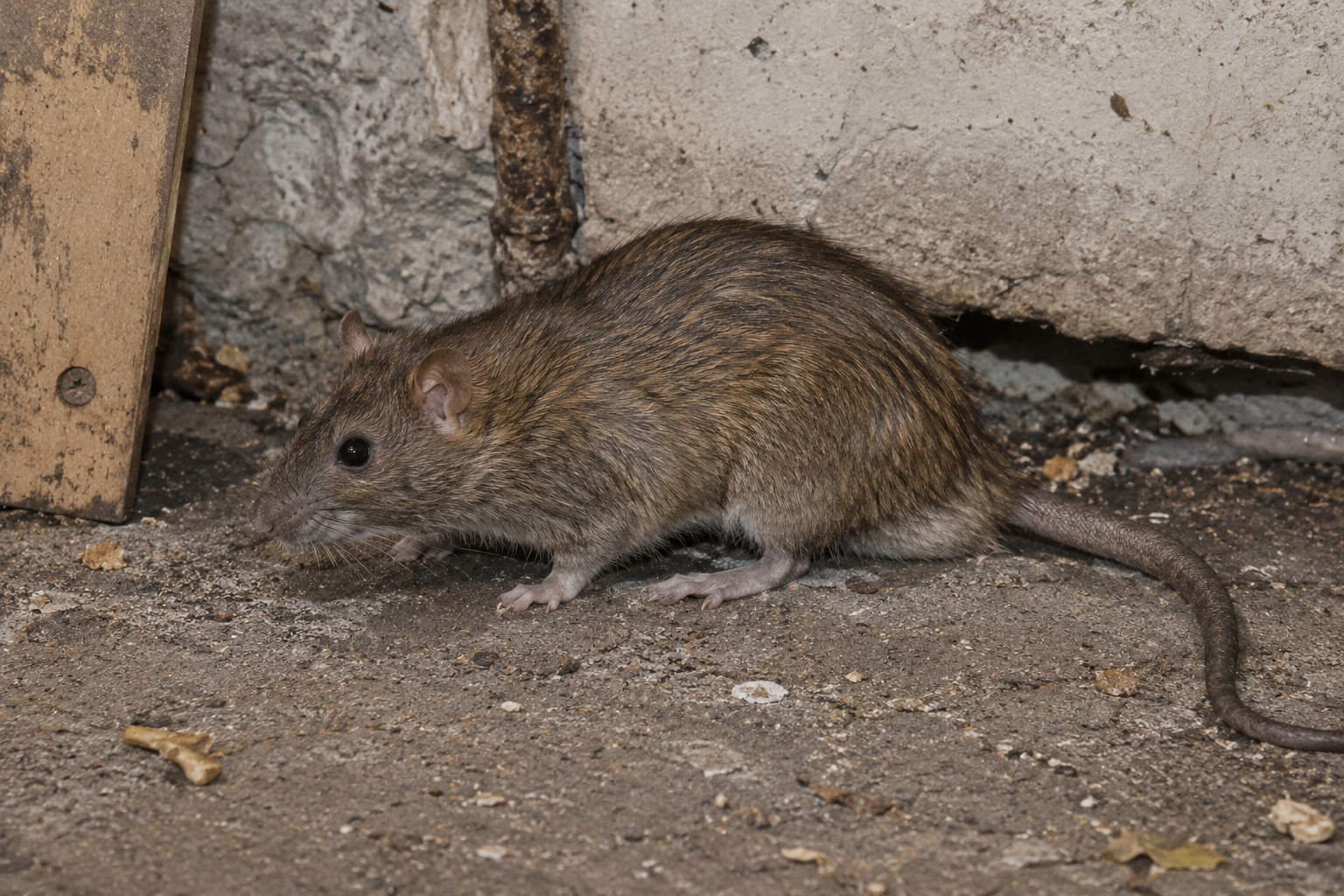
The brown rat (Rattus norvegicus), the most common in Île-de-France, digs burrows in cellars, crawl spaces, basements, sewers and around buildings. The black rat (Rattus rattus), more of a climber, prefers heights: attics, false ceilings, service ducts and frameworks. An adult rat weighs 200 to 500g, lives in a hierarchical colony and moves at night along walls. A female can give birth 5 to 6 times a year, with 6 to 12 young per litter: an isolated presence becomes an infestation in a few weeks.
Step 3
What causes an infestation?
Rats settle as soon as they find access (cracks in facades, unsealed service ducts, cellar hatches, defective siphons and pipes), a permanent food source (poorly maintained bin rooms, ground-floor restaurants and food shops, composts) and a water source. In Paris, roadworks, old sewer systems and building adjacency promote migration from one building to another: an infested neighbouring building very often contaminates the entire co-ownership.
Step 4
How do you recognise an infestation?
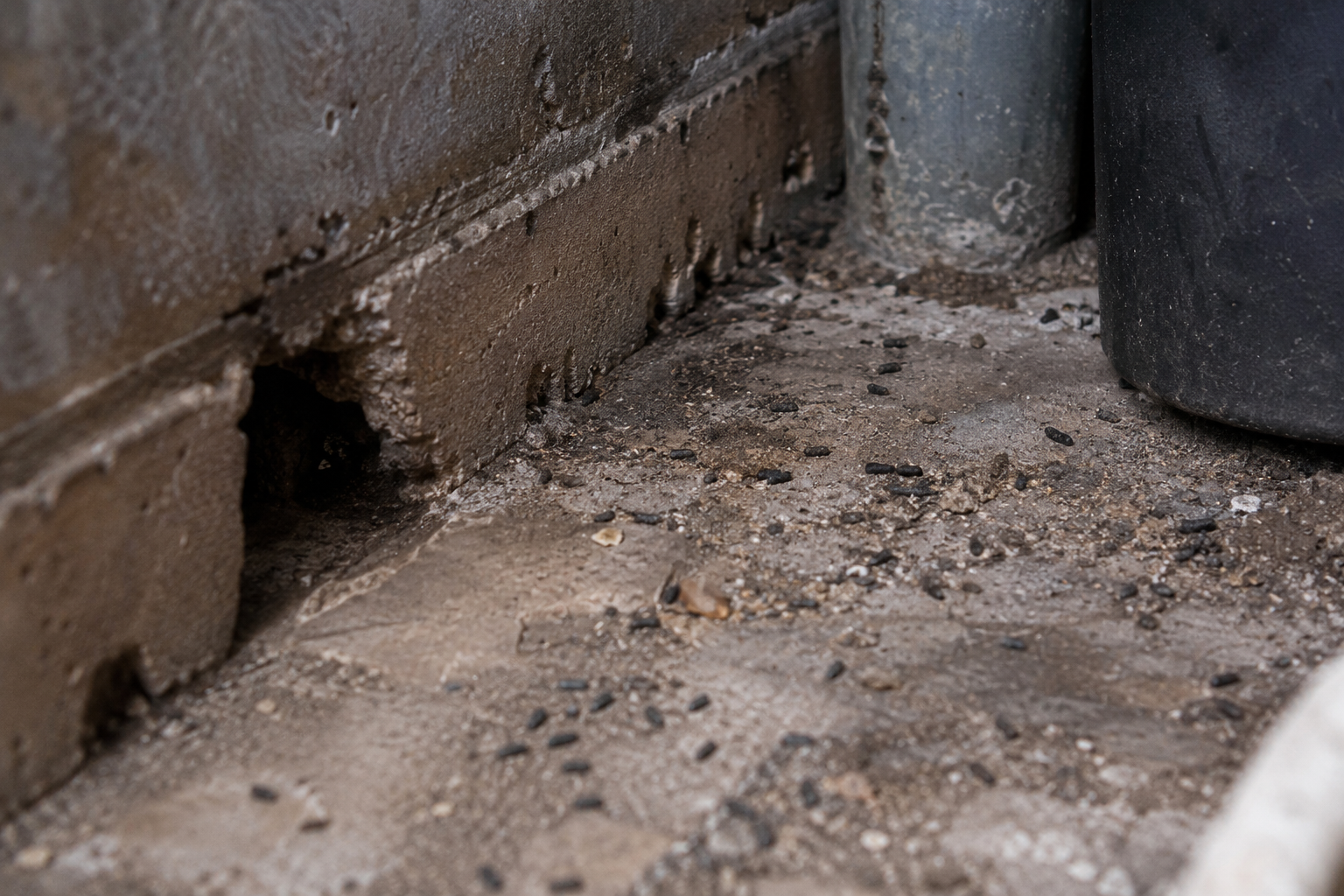
A rat infestation is spotted by black elongated droppings 1 to 2cm long (similar to an elongated rice grain), deep gnawing on doors, skirting boards, ducts and packaging, dark greasy smears along walls, trails and burrows in gardens or cellars, and heavy running noises at night. A marked ammonia smell in the cellar confirms an active colony.
Step 5
In pictures
Step 6
Where do they hide?
Rats hide in cellars, basements, crawl spaces, bin rooms, service ducts, false ceilings and back kitchens, as well as outdoors in burrows close to walls, under terraces and near composting points. Mapping these refuges and nocturnal paths determines the effectiveness of baiting.
Step 7
Health and property risks
Rats contaminate food with their urine and droppings and transmit leptospirosis, salmonelloses and various parasites. Their gnawing degrades insulation, pipes and electrical wiring — a frequent cause of animal-related fires in old buildings. In co-ownerships or food businesses, an untreated colony leads to heavy material damage and the risk of administrative closure.
Step 8
Our 5-step intervention
- 1
Full inspection
Complete inspection of the premises, precise identification of the pest, assessment of the infestation level and of the layout of the site in order to define the most effective intervention strategy.
- 2
Transparent quote
A detailed quote is issued before any intervention, presenting the recommended solutions, the response times and any travel costs that may apply.
- 3
Professional treatment
Intervention carried out by a certified technician using mechanical, thermal or chemical methods suited to your situation, in full compliance with current regulations.
- 4
Prevention & proofing
Identification of the causes of the infestation, tailored recommendations and, where necessary, sealing of entry points to limit the risk of re-infestation.
- 5
Follow-up & support
An intervention report is issued, along with post-treatment advice and the option to schedule a follow-up visit or a monitoring contract according to your needs.
Step 9
Rodent control — Rats price list — Paris & Île-de-France
Indicative prices — exact quote issued after the free diagnosis.
Scroll the table horizontally →
| Treatment type | up to 30m² | up to 60m² | up to 90m² | 120m² and above |
|---|---|---|---|---|
| Installation of secured rodenticide bait stations | from 129 € | from 179 € | from 229 € | on quote |
| Mechanical trapping | from 129 € | from 179 € | from 229 € | on quote |
| Combined treatment: bait + traps + proofing | from 199 € | from 249 € | from 299 € | on quote |
| Annual preventive contract (4 visits/year) | from 129 € per visit |
Step 10
How can infestations be prevented?
After elimination, entry points larger than 20mm are sealed with steel wool, mortar or stainless steel mesh, bin rooms and bins are secured, accessible water points are removed and cellars and surroundings are kept clear. For co-ownerships and businesses, a bi-annual inspection contract remains the best protection against recolonisation from the street.
Step 11
Rodent control — Rats — FAQ
How long does an intervention take?
Between 1 and 4 hours depending on the surface area and the level of infestation.
Are the treatments dangerous for children and pets?
Our protocols strictly comply with regulations. A re-entry period will be specified for you.
Do you handle emergencies?
Yes, intervention within 24h across the whole of Île-de-France. Intervention 7 days a week, 24/7.
Is there a guarantee?
Yes, a results guarantee with follow-up visits included depending on the service.
What area do you cover?
Paris (75), 77, 78, 91, 92, 93, 94, 95 — the whole of Greater Paris.
Prevention and follow-up — optional add-on service
Beyond the rodent control — rats treatment itself, SOS 4D Paris offers an optional scheduled follow-up visit to verify how well the protocol worked, detect any renewed activity and adjust the devices if needed. This separately invoiced service includes an inspection of the treated areas and sensitive spots, a check of the baits or traps in place, a comparative assessment and a written report handed over directly.
To prevent the pest from coming back, we identify the contributing factors specific to your home or premises — entry points, food sources, damp areas, sealing defects — and give you concrete recommendations to implement yourself. A periodic visit contract (quarterly, half-yearly or yearly) is also available on quote for long-term protection; its price depends on the chosen frequency and the site configuration.
Need a fast intervention?
Our certified technicians intervene within 24h across Paris and Île-de-France.