
Step 1
Our treatments against mice
Against mice, the protocol prioritises a dense grid of devices (mice travel little): mechanical trapping, secure TP14 bait stations when the context allows, dusting of partition paths and, above all, systematic sealing of 6mm access points, as part of an Integrated Pest Management (IPM) plan.
Diagnosis and path mapping
Locating droppings, nests, gnawing and tracking signs (fluorescent flour, monitoring boards) to locate active zones and position devices in the right place, every 2 to 3 metres.
Intensive mechanical trapping
Snap traps and monitoring boards in a tight grid, preferred method in professional kitchens, nurseries, schools and homes with children or pets. Regular monitoring and removal of carcasses included.
Secure baiting (TP14 rodenticide)
Sealed and numbered stations with anticoagulant blocks or pastes authorised by ANSES, used where the layout allows, outside food handling areas.
Sealing of 6mm access points
Sealing of thresholds, pipe passages, skirting boards, ventilation grilles and ducts with steel wool, mortar and stainless steel mesh. Decisive step: without it, a new population will resettle within weeks.
Follow-up and pest control register
Scheduled monitoring visits, placement plan, up-to-date 3D register, SDS and intervention certificate for professional hygiene audits.
Step 2
Habitat and behaviour of mice
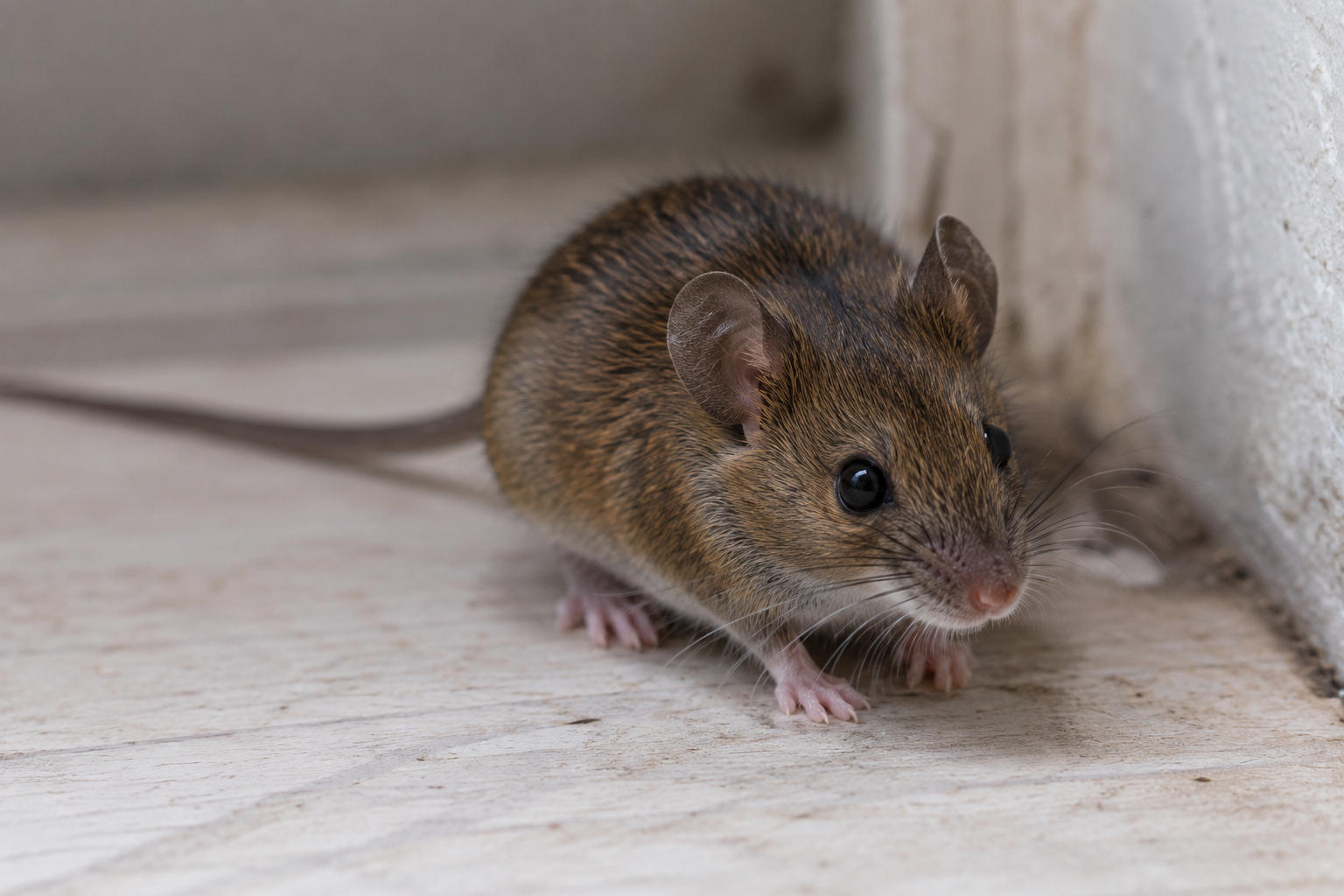
The house mouse (Mus musculus) measures 7 to 10cm and weighs only 15 to 25g. It nests as close to food as possible: partitions, wall linings, under appliances, false ceilings, kitchen cupboards and storerooms. Unlike the rat, it nibbles little but very often (up to 200 food intakes per day) and constantly explores its territory, limited to a few metres. Its reproduction is explosive: 5 to 10 litters per year, 4 to 8 young per litter, mature in 6 weeks.
Step 3
What causes an infestation?
A mouse enters through a 6mm hole: door thresholds, pipe passages, disjointed skirting boards, ventilation grilles without mesh, electrical ducts. Infestations often start after works, a delivery of boxes or pallets, or in autumn when the cold pushes mice towards heated buildings. Poorly stored food, crumbs, pet kibble and open bins are enough to fix a population permanently.
Step 4
How do you recognise an infestation?
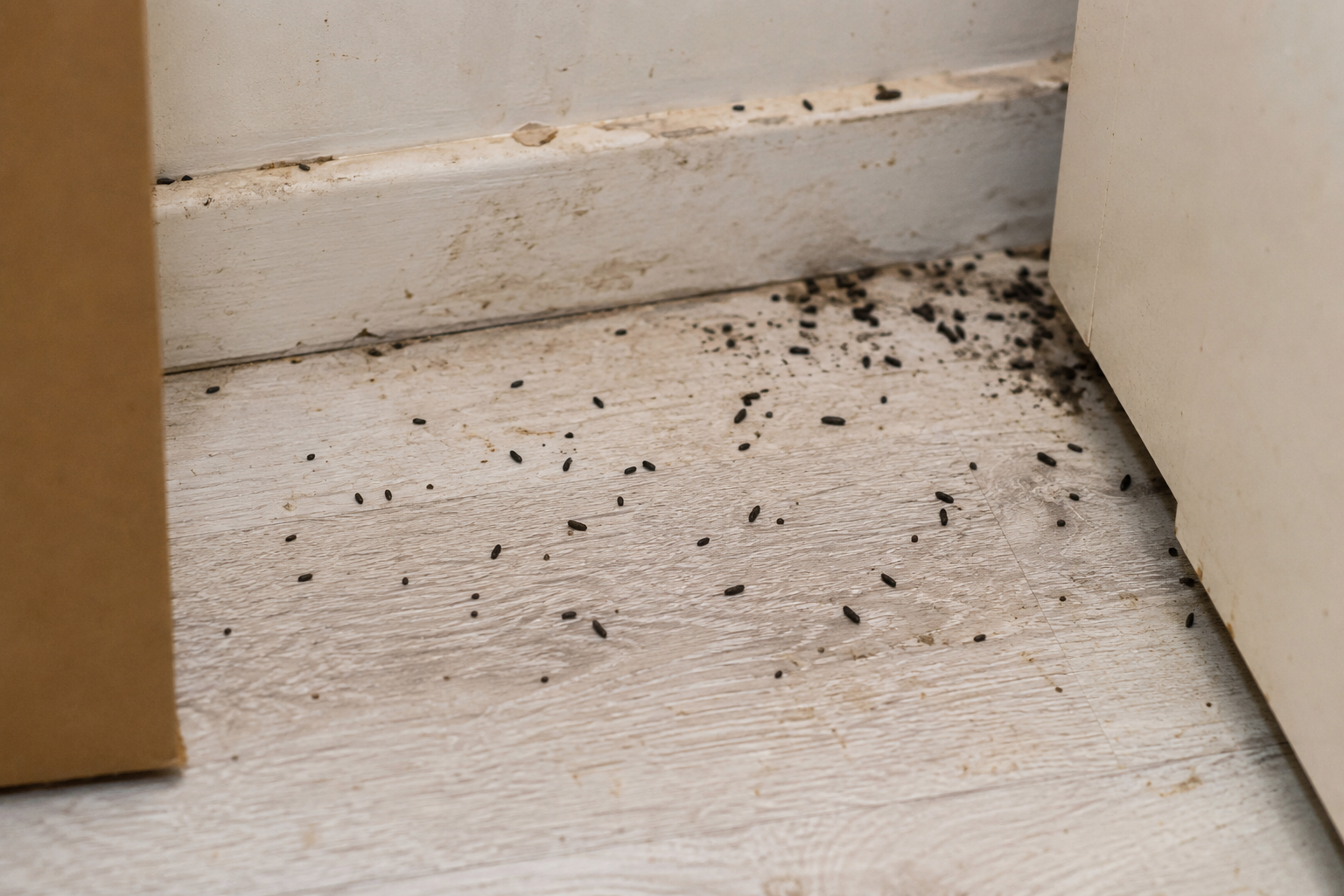
Mice leave small black droppings 3 to 6mm long, rice-grain shaped, scattered in drawers, under the sink and at the back of cupboards. You also observe packaging gnawed into clean small holes, nests made of shredded paper or insulation, a characteristic musky smell in partitions, and slight scratching noises at the beginning of the night. Seeing a mouse in the daytime already signals a significant population.
Step 5
In pictures
Step 6
Where do they hide?
Mice lodge in partitions and wall linings, behind and under appliances (oven, dishwasher, refrigerator), in false ceilings, kitchen cupboards, storerooms, false floors and technical boxes. Their nests are almost always found less than 3 to 5 metres from a food source.
Step 7
Health and property risks
Mice contaminate food and surfaces with their urine and droppings (salmonella, hantavirus, leptospires), trigger respiratory allergies and gnaw cables and electrical insulation. In food businesses, the slightest dropping found during a hygiene inspection can lead to non-compliance or even administrative closure.
Step 8
Our 5-step intervention
- 1
Full inspection
Complete inspection of the premises, precise identification of the pest, assessment of the infestation level and of the layout of the site in order to define the most effective intervention strategy.
- 2
Transparent quote
A detailed quote is issued before any intervention, presenting the recommended solutions, the response times and any travel costs that may apply.
- 3
Professional treatment
Intervention carried out by a certified technician using mechanical, thermal or chemical methods suited to your situation, in full compliance with current regulations.
- 4
Prevention & proofing
Identification of the causes of the infestation, tailored recommendations and, where necessary, sealing of entry points to limit the risk of re-infestation.
- 5
Follow-up & support
An intervention report is issued, along with post-treatment advice and the option to schedule a follow-up visit or a monitoring contract according to your needs.
Step 9
Rodent control — Mice price list — Paris & Île-de-France
Indicative prices — exact quote issued after the free diagnosis.
Scroll the table horizontally →
| Treatment type | up to 30m² | up to 60m² | up to 90m² | 120m² and above |
|---|---|---|---|---|
| Installation of secured rodenticide bait stations | from 129 € | from 179 € | from 229 € | on quote |
| Mechanical trapping | from 129 € | from 179 € | from 229 € | on quote |
| Combined treatment: bait + traps + proofing | from 199 € | from 249 € | from 299 € | on quote |
| Annual preventive contract (4 visits/year) | from 129 € per visit |
Step 10
How can infestations be prevented?
Prevention relies on sealing every opening larger than 6mm (steel wool, mortar, brush door sweeps, fine mesh), storing food in airtight containers, cleaning crumbs and grease behind appliances, daily bin management and checking box deliveries. Periodic monitoring is recommended for catering and food retail.
Step 11
Rodent control — Mice — FAQ
How long does an intervention take?
Between 1 and 4 hours depending on the surface area and the level of infestation.
Are the treatments dangerous for children and pets?
Our protocols strictly comply with regulations. A re-entry period will be specified for you.
Do you handle emergencies?
Yes, intervention within 24h across the whole of Île-de-France. Intervention 7 days a week, 24/7.
Is there a guarantee?
Yes, a results guarantee with follow-up visits included depending on the service.
What area do you cover?
Paris (75), 77, 78, 91, 92, 93, 94, 95 — the whole of Greater Paris.
Prevention and follow-up — optional add-on service
Beyond the rodent control — mice treatment itself, SOS 4D Paris offers an optional scheduled follow-up visit to verify how well the protocol worked, detect any renewed activity and adjust the devices if needed. This separately invoiced service includes an inspection of the treated areas and sensitive spots, a check of the baits or traps in place, a comparative assessment and a written report handed over directly.
To prevent the pest from coming back, we identify the contributing factors specific to your home or premises — entry points, food sources, damp areas, sealing defects — and give you concrete recommendations to implement yourself. A periodic visit contract (quarterly, half-yearly or yearly) is also available on quote for long-term protection; its price depends on the chosen frequency and the site configuration.
Need a fast intervention?
Our certified technicians intervene within 24h across Paris and Île-de-France.